Republicans retain a major funding edge, but shifting races and costly late advertising are limiting its impact.
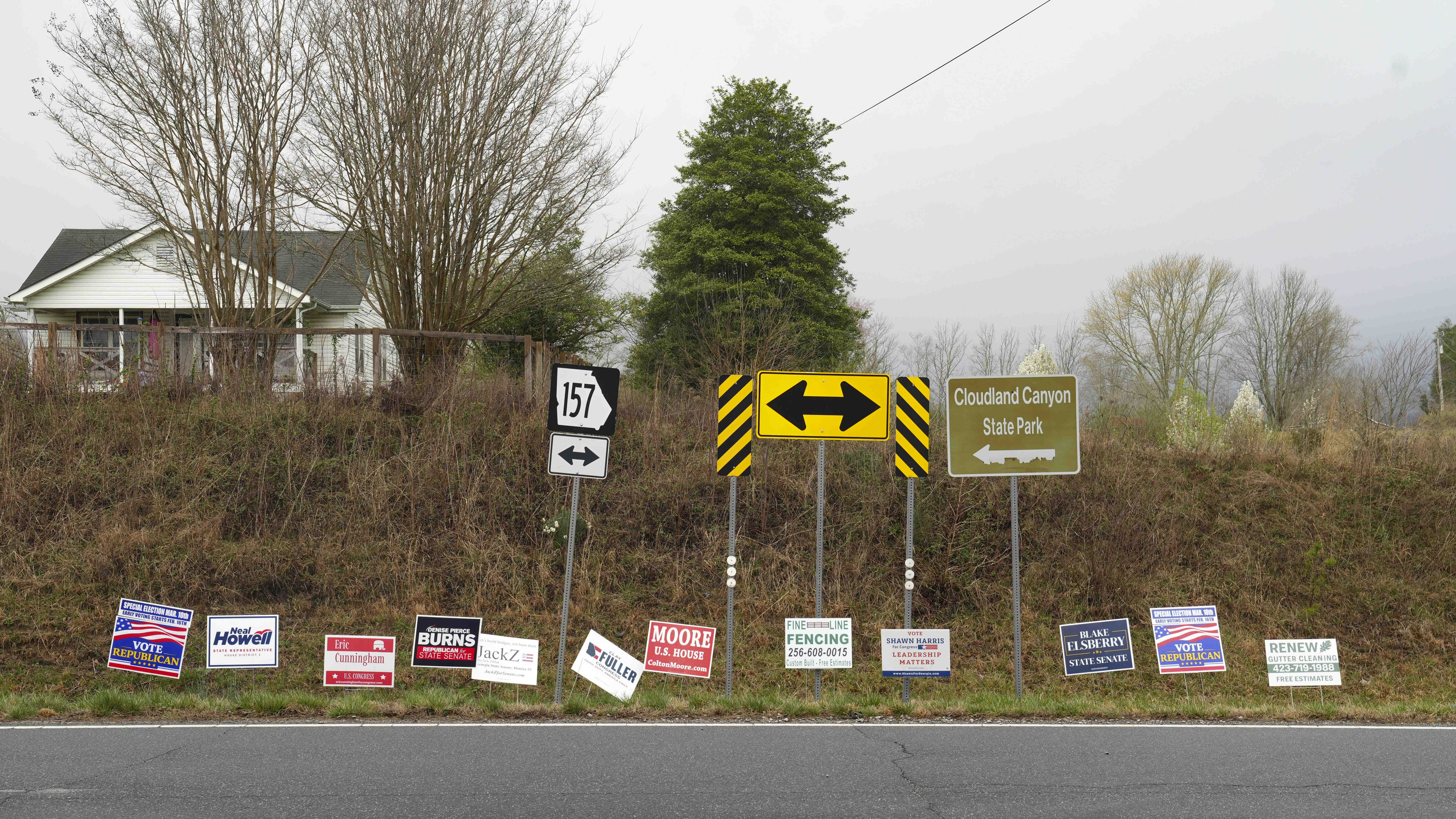
Republicans have more money available for the midterms, but their spending edge is proving less useful as races tighten. Democratic hopes are rising in contests once seen as safe for Republicans, forcing both parties to reassess where their money can still make a difference. The late-stage scramble points to a basic limit: cash can buy advertising, but it can’t quickly build campaign operations or guarantee that voters will respond.

New filings show that $1 billion was spent during the first two weeks of October alone. This year is expected to set a new record for midterm spending, surpassing 2022, which in turn exceeded 2018 and 2014. Voters across party lines say there’s already too much money in politics. Yet candidates and party officials in both camps say they need more.
Democrats are increasingly confident about taking the House and more hopeful about their Senate prospects, but party officials worry they lack the funds to compete across a widening map. Michael Bloomberg, the billionaire former New York mayor and presidential candidate, pledged $80 million to help Democrats before Election Day. That is a substantial infusion, though it doesn’t necessarily solve the funding needs of party committees and outside groups across multiple close contests.
More competitive races, harder choices
Republican organizations entered the cycle with a sizeable financial advantage and still have millions to spend. But they are now redirecting funds away from contests that appear to be slipping. The Senate Leadership Fund, the leading Republican group supporting Senate candidates, didn’t run television ads last week for Mike Collins in Georgia, where he is expected to lose to Senator Jon Ossoff. The group had already reduced its support for Republican Michael Whatley in North Carolina.
The shift reflects how quickly the map has changed. As President Trump’s standing has weakened, Republican candidates have faced greater difficulty holding onto seats previously viewed as safe. Democrats, meanwhile, worry that momentum could outrun their resources. The Senate Leadership Fund has moved money from North Carolina to Kansas, where Democrat Adam Hamilton is challenging Senator Roger Marshall. A Democrat hasn’t won a Senate race in Kansas since 1932, but Hamilton is now seen as a serious threat.

Republicans also face higher costs in districts created by new map lines. Some seats they expected to win easily have become closely contested. Since September 1, Republican candidates and outside groups have spent nearly $100 million on advertising in nine of 14 newly drawn districts, according to a report cited by Punchbowl News. The Republican Party appears to have a secure hold on five of those 14 seats, leaving substantial sums directed at the rest.
Fundraising totals don’t tell the whole story
Money is unevenly distributed, and a candidate’s fundraising total doesn’t show how much support their wider party network can provide. James Talarico, the Democratic Senate candidate in Texas, raised $64 million in the third quarter alone, the highest quarterly total ever recorded for a candidate. Texas has a large electorate and many media markets, making it an expensive state in which to reach voters. His opponent, Ken Paxton, has relatively little money on hand.
But Democratic committees and major outside groups are more financially constrained than some of their candidates. The party’s fundraising difficulties reflect the usual advantage enjoyed by the party of the sitting president, as well as donor dissatisfaction. Some donors remain frustrated by strategic choices in the 2024 presidential loss, disorder at the Democratic National Committee since then, and what they view as uninspiring leadership from elected officials.
Republican candidates may also have limited funds of their own, but Republican committees and political action groups remain well supplied. Much of the money comes through independent-expenditure groups, including super PACs. The Brennan Center for Justice found that these groups spent $2 billion through the end of September, with spending weighted heavily toward Republicans. Elon Musk was the largest single donor, spending $366 million this cycle.
Outside groups have a trade-off: they can spend large sums, but they pay higher rates for advertising than candidates do. That difference can reduce the amount of airtime their money buys. And with the final stretch underway, the value of additional spending may be falling for other reasons too.
Late spending faces diminishing returns
By this point, there is little time to build a strong canvassing operation or other voter-contact infrastructure. Television slots may already be booked, and remaining airtime is more expensive. Republicans have also filled television, websites and mailboxes with ads for months. So far, the heavy spending hasn’t clearly moved close races toward Republican candidates; some contests remain tight, while others appear to be shifting further toward Democrats.
The broader mood among voters helps explain why. People are unhappy about high prices, especially fuel, and some are frustrated by a president who they feel dismisses their concerns about affordability. The article also points to dissatisfaction with Trump’s attention to vanity projects and an unpopular, inflationary war in Iran as pressures on Republican candidates.
Trump’s super PAC still has $164 million left to spend. That reserve gives Republicans options, but the remaining weeks offer less time to turn money into new organizing capacity, and paid messages have to compete in a crowded media environment. The spending surge may set records without changing the direction of the closest contests. The practical question now is not simply how much each side has raised, but whether its remaining resources can reach persuadable voters in the places where the outcome is still uncertain.