Harold Cruse challenged integration and ideological orthodoxy, arguing that lasting progress depends on community resources, historical understanding and open debate.
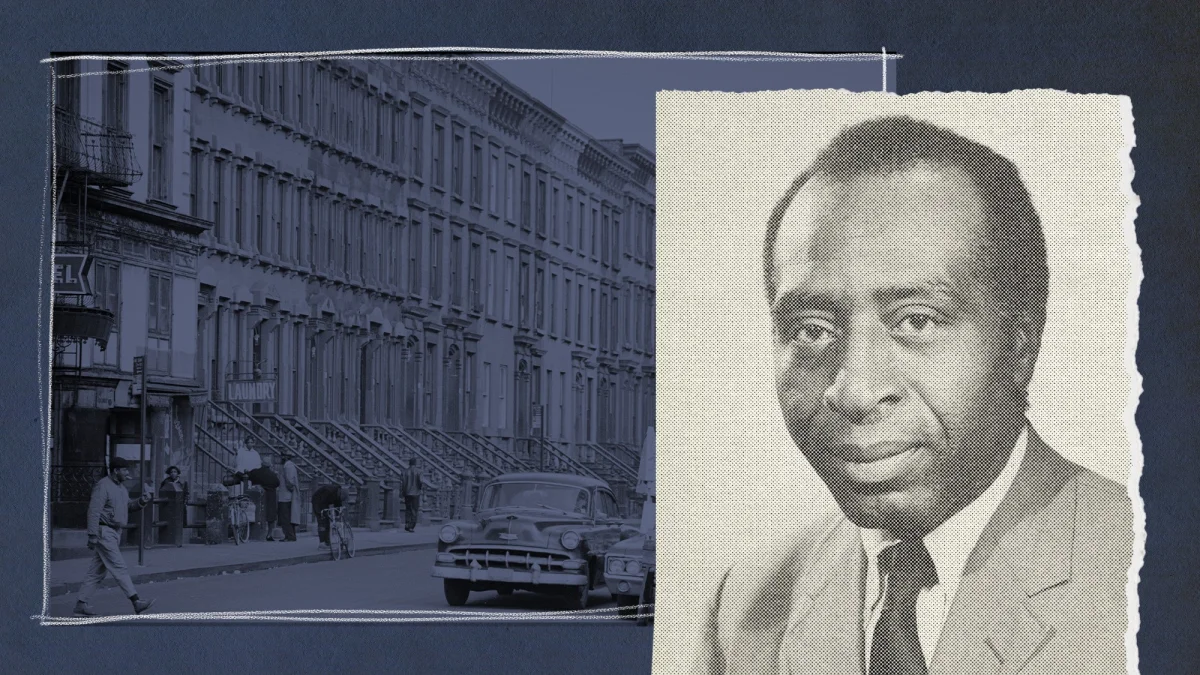
Harold Cruse’s most lasting challenge was to ask whether equal treatment can be secured without communities having the resources and power to shape their own lives. In The Crisis of the Negro Intellectual, published in 1967, he argued that individual rights are limited when groups have unequal influence. His proposed alternative—Black cultural, economic and political self-determination—remains a useful lens on debates about racial equality. It also came with sharp limits: Cruse’s polemics alienated allies, and his writing included damaging stereotypes.
That tension helps explain why his work mattered, then receded from view. Marshall Lee encountered The Crisis in Philadelphia in 1967, while becoming involved in Black revolutionary circles. He later recalled that the book brought clarity to movements he considered at risk of destructive choices. Lee went on to study with Cruse as a doctoral student at the University of Michigan. The book also became a significant text in the emerging field of Black studies; Henry Louis Gates Jr. encountered it in three Yale classes.
Cruse’s arguments provoked strong reactions. The poet Audre Lorde accused the book of “inaccuracies, misrepresentations and plain lies.” Cruse took aim at prominent figures in the integration movement as well as leftist thinkers, and his criticism made him enemies across ideological lines. His work was influential partly because it refused to affirm familiar assumptions. That same quality helped push him toward the margins of later conversations.
How Cruse arrived at his argument
Born in Petersburg, Virginia, in 1916, Cruse grew up in a city with a substantial history of Black institutions. His mother worked as a domestic servant and his father in a factory. After an unsettled childhood, Cruse and his father moved to Harlem. There, the art and ideas of the Harlem Renaissance became part of his intellectual world. Countee Cullen taught at his junior high school, and Cruse attended lectures by Richard Wright, Claude McKay and W. E. B. Du Bois.
His experiences during World War II widened that view. Cruse served in the Army in Algeria and Italy. He observed the connection that Arabs resisting French rule felt with Black soldiers, and became impressed by Italian communists. Later, he contrasted underground movements in those countries, which he called “professionals not amateurs,” with activism he saw as lacking preparation and discipline. That judgment would shape his criticism of American movements for decades.
Cruse’s early work at the Communist Party newspaper Daily Worker already showed his resistance to a single approved account of Black life. He wanted to write about its complications, not only celebrate figures in the struggle for liberation. Skeptical of integration as a complete answer, he joined Black writers and artists who wanted to strengthen a distinct Black identity. He helped establish the short-lived Harlem Writers Club, whose members sought to break from what they called “enforced interracialism.” That stance put him at odds with Communist leadership.
He later criticized the Black communist-aligned publication Freedom for what he called its “cliquish remoteness,” describing its writers as “intellectual prisoners of the dying left-wing movement.” The pattern was clear: Cruse opposed political conformity wherever he found it, including among people whose broader aims he shared. He knew that this approach could carry a cost. While writing The Crisis, he reportedly told friends, “If I publish it, I’m going to have to leave the country.”
Resources, power and the limits of integration
Cruse’s central claim was that the United States may describe itself in terms of individual freedom, but people also live within groups that hold unequal power. In his account, white people’s greater influence as a group helped secure greater rights and opportunities for white individuals. Integration into a society structured by that imbalance, he argued, could leave Black people subordinate, while offering limited privileges to those who complied with its expectations.
He was just as skeptical of an opposing path. Cruse believed that Black leftists could respond to exclusion from political organizations by becoming more committed to narrow ideological positions. The result, in his view, was a movement that might appear more militant while growing less connected to the needs and views of Black communities. He saw both approaches as traps: accommodation could preserve unequal arrangements, while sectarianism could isolate those seeking change.
His alternative was group self-determination: Black communities building cultural life, economic capacity and political influence together. Cruse viewed the Harlem Renaissance as a chance to create a community with the strength of the Black institutions he had known about in Petersburg. Yet artistic achievement alone, he argued, could not sustain that effort. Harlem residents patronized businesses whose property and profits were controlled by white owners, leaving the community without control over an important source of local wealth.
For Cruse, the practical question was whether community resources met residents’ basic needs and remained accountable to them. He proposed blocking the extraction of resources from Black communities, then developing durable local institutions, such as cooperatively owned businesses and locally controlled political organizations. His 1987 book, Plural but Equal, returned to a related question: what might have happened if Black Americans had directed more effort toward securing resources for their own communities instead of focusing primarily on integration?
Cruse thought the mid-1960s offered an opening for this kind of work, but he warned against impatience and rigid factionalism. He feared that some activists might prize dramatic sacrifice over the slow work of building a shared social vision. He also questioned whether Black intellectuals, including some leaders of the civil-rights movement, would support changes that could challenge their own middle-class security.
A complicated legacy for Black studies
Cruse became the first director of the African American Studies program at the University of Michigan. There, he urged students to question their assumptions rather than arrive with conclusions fixed in advance. “We can’t allow dogmatism of any kind to be injected into our thinking about reality,” he told them. He also began asking what a Black political strategy could look like if it accounted for differences among Black communities across the country.
The program’s first semester was contentious. During protests over university treatment of Black students in the spring of 1970, the university committed to reshaping the program around student demands. Cruse later sensed stagnation as protests subsided and faculty disagreements over teaching and departmental direction grew. He, too, became caught in disputes that reflected the factionalism he had criticized. He worried that the history of Black justice movements was fading and that scholarship was becoming too attached to nostalgia.
Cruse’s record makes it impossible to treat his ideas as a package to accept without scrutiny. He could be cantankerous and cruel; Grace Lee Boggs, a former collaborator, remembered him as “very mean.” His writing also included bigoted claims about Black women, southern Black people, West Indians and Jews. He portrayed Black women writers as driven by resentment toward Black men and made sweeping claims about Jewish nationalism. These statements harmed people and undermine the authority of his work.
Still, Cruse’s insistence on historical understanding and intellectual courage remains relevant. He argued that movements lose sight of ordinary people when internal disputes over ideological purity take priority. He also believed that activists must examine the assumptions of their allies and their own, even when doing so is uncomfortable. His work does not settle how communities should pursue equality. It does press a lasting question: who controls the institutions, resources and decisions that shape daily life?
[Read: ‘Race neutral’ is the new ‘separate but equal’]
[Read: The Harlem Renaissance was bigger than Harlem]
[Read: The America that killed George Floyd]
This article was adapted from Vincent W. Lloyd’s book, Harold Cruse: Critic, Writer, Teacher.