A small study found a temporary shift in some measures of biological age after plasma exchange. It doesn’t show that the procedure slows aging long term.
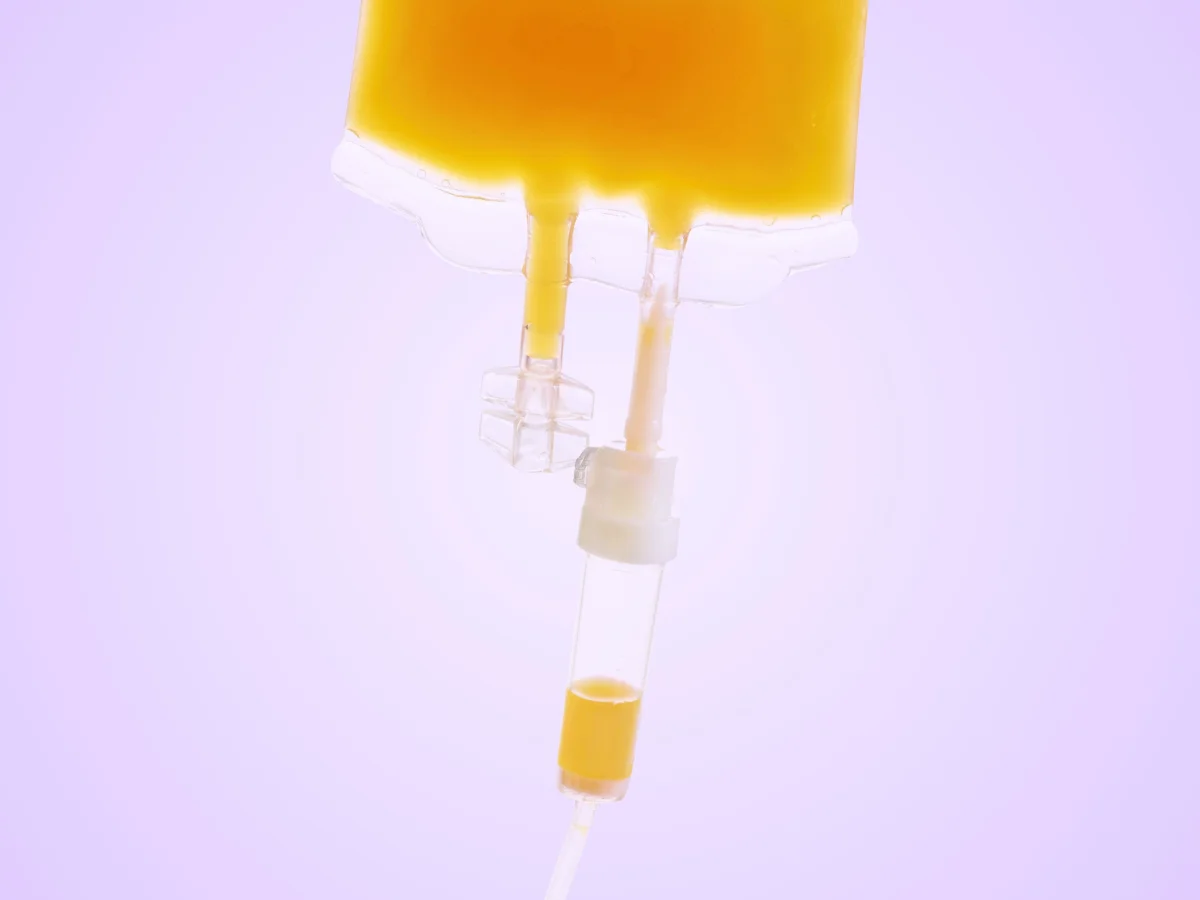
Therapeutic plasma exchange produced a short-lived change in some measures of biological age in a small study, but the result had largely faded by the study’s end. The findings offer a clue about how blood components may relate to aging. They don’t show that replacing plasma can slow aging over the long term or improve health for people generally.
The 2025 study, published in Aging Cell, enrolled 42 people. Researchers removed participants’ plasma and replaced it with purified albumin, a blood protein, and saline. Some participants also received intravenous immunoglobulin (IVIG), an immune therapy. The team used laboratory measures of molecular aging to track changes over time.
Some participants’ estimated biological age was about 2.5 years lower at a midpoint assessment than at the start. That figure can sound like a lasting reversal, but geriatrician Andrea Maier, MD, PhD, said the comparison was between the midpoint and baseline. By the end of the study, the effect was nearly gone. The result is a temporary shift in a measurement, not evidence that participants became younger in a lasting or meaningful health sense.
Why researchers are studying plasma
Plasma is the liquid part of blood. It carries proteins, metabolites, hormones and signals involved in inflammation, among other substances. Because these molecules circulate through the body, their levels can offer researchers a broad view of biological processes across organs and tissues. Maier has described plasma as a transport system carrying information between parts of the body.
Researchers can measure many proteins in plasma and use patterns in those measurements to estimate biological age. The idea is that a person’s body may show features associated with an older or younger age than their years lived. But biological age isn’t one fixed, precise reading. Different tests may capture different aspects of health, and an estimate isn’t the same as a diagnosis or a direct measure of how long someone will live.
Research interest in plasma and aging grew in part from animal experiments involving parabiosis. In this surgical approach, researchers connect the circulatory systems of two animals. Studies pairing older and younger mice found that older animals exposed to the younger animals’ blood showed greater resilience to some forms of stress affecting tissues and organs. Those findings helped prompt questions about whether circulating substances could be removed, added or altered to affect aging-related processes.
Animal results don’t establish that the same approach benefits people. Plasma exchange is already used in care for certain autoimmune diseases, neurological disorders and blood cancers, but its use for those conditions doesn’t establish it as an anti-aging treatment. The current study examined biological measures following an intervention; it doesn’t show that plasma exchange prevents disease, extends life or improves day-to-day function.
What the results leave unanswered
The midpoint result is only part of the picture. Maier’s account of the study emphasizes that the apparent reduction in biological age had mostly disappeared by the final assessment. A change in a biomarker can be useful for generating research questions, but it doesn’t automatically translate into a lasting health benefit. Longer follow-up and measures of health that matter to participants would be needed to clarify what, if anything, the shifts mean.
The researchers also don’t yet know who might benefit most. Keenan Walker, PhD, a senior investigator at the National Institute on Aging, said participants who were less healthy appeared to have a stronger response to the intervention. That observation raises a question for future research, but a finding in a group of 42 people can’t establish which people would benefit or whether the difference would hold up in a larger study.
There are also questions about the intervention itself. The study involved removing plasma and introducing replacement fluids, with IVIG added for some participants. The reported results don’t establish which part of the treatment was responsible for the temporary change, or whether the same effects would occur with different participants or protocols. Researchers would need larger studies, comparisons that can help separate these effects, and longer follow-up to answer those questions.
Maier described the work as an early, phase 1 study and said its results are not a basis for using plasma exchange in routine care to address aging. Her view reflects the limits of the evidence: a small study can show that a procedure is possible to study and identify signals worth investigating, but it can’t settle questions about lasting benefit, who might be suited to it or how its risks compare with potential gains.
What to take away
For now, the “2.5 years younger” figure needs its context: it described a midpoint change in biological-age estimates, and the effect was nearly gone by the end of the study. It doesn’t mean participants gained 2.5 years of life or saw a lasting reversal of aging.
Blood-based approaches may help researchers understand how circulating molecules relate to health as people age. The next useful evidence would come from larger studies that track participants longer and assess health outcomes alongside laboratory estimates. Anyone considering plasma exchange for reasons related to aging can discuss the evidence, possible risks and available options with a doctor. A doctor or pharmacist can also help assess how a proposed treatment fits with existing care.
For more on related health topics, see how incline walking compares with running, a personal account of grief and mental health care, and reporting on access to an unapproved weight-loss drug.
Andrea Maier, MD, PhD is a geriatrician and board member of the Academy for Health and Lifespan Research. Keenan Walker, PhD is a senior investigator at the National Institute on Aging.
SELF’s fitness and nutrition reporting is available by email.