Oats may support blood sugar control, but short-term oatmeal diets can affect medication needs and call for medical supervision.
What the research suggests
Oats may help with blood sugar and cholesterol, and small clinical studies suggest that brief oatmeal diets can have effects lasting weeks. Those findings are promising, but they don’t establish that oatmeal treats diabetes on its own or that people should change medication without medical guidance.
Interest in oatmeal as a diabetes food goes back more than a century. Carl von Noorden published findings on an oatmeal diet in 1903, before insulin was discovered. Doctor James B. Herrick later tried the diet with patients after initial doubts, and in 1909 argued that young people with diabetes should have access to its benefits. Elliott Joslin, a prominent diabetes specialist, called the effects “sometimes magical” and described the diet as a puzzle. Early accounts also noted that animal protein seemed to interfere with the diet’s effects.
Today, research offers possible explanations for why oats might help. More than a dozen randomized controlled trials have found improvements in short- and longer-term blood sugar measures, as well as cholesterol, among people eating oats. These results support oats as one useful food within a broader dietary pattern; they don’t show that every person will respond in the same way.
Fiber, gut bacteria and blood sugar
Oats contain beta-glucan, a fermentable fiber. Gut bacteria can use fiber to produce short-chain fatty acids, compounds associated with anti-inflammatory effects. Oat fiber can also act as a prebiotic, supporting bacteria such as Lactobacillus and Bifidobacteria. Researchers think these changes in the gut microbiome may contribute to better blood sugar control.
Studies of fiber from oats and beans have reported improvements in longer-term blood sugar control among people with diabetes. One dietary study combined oats with beans, fruit, vegetables and nuts. After a month, participants’ fasting blood sugar fell by about 25%, and those with more gut bacteria that produce short-chain fatty acids tended to have better blood sugar measures, including hemoglobin A1c. These findings point to the overall high-fiber pattern, rather than oatmeal alone, as a possible contributor.
What short oatmeal studies found
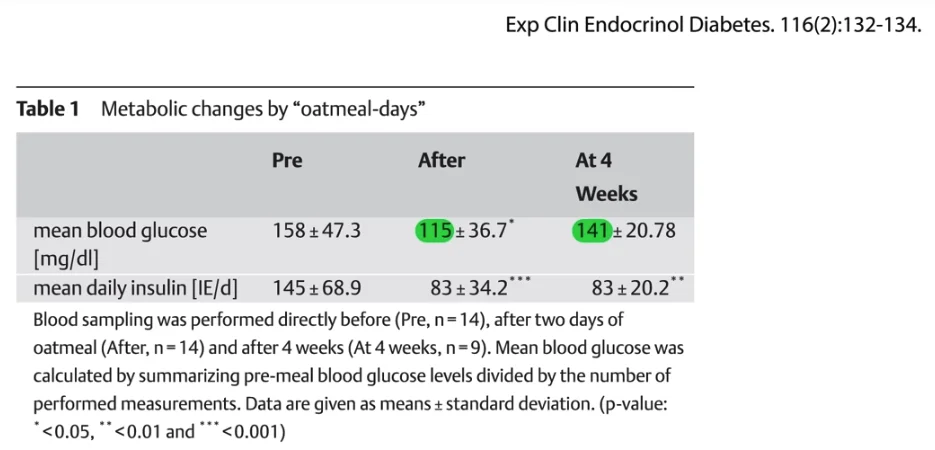
A randomized controlled crossover trial compared two days of an oatmeal diet with calorie restriction alone. Participants’ insulin requirements fell by about 40% after the oatmeal period. A longer-term blood sugar measure still reflected improvement four weeks later. Other studies described similar reductions in insulin needs and better blood sugar levels, with changes persisting for weeks after participants returned to their usual diets.
These are notable results, but they come from short dietary interventions and don’t tell us that a two-day oatmeal plan is appropriate or safe for everyone. The reports don’t establish a general treatment protocol, and the observed medication changes make clinical oversight especially relevant.

Medication safety matters
Because blood sugar can improve, an intensive oatmeal intervention may change how much glucose-lowering medication a person needs. The source cautions that this should happen under close medical supervision: medication may need prompt adjustment, and a rapid change in blood sugar can be hard to manage for someone who has difficulty recognizing or reporting low blood sugar symptoms.
Anyone considering a substantial dietary change while using diabetes medication can discuss it with their doctor or pharmacist first. The research doesn’t support independently reducing or stopping a prescribed treatment.
Oat types and blood sugar response
How oats are processed affects their glycemic index, a measure of how quickly a food tends to raise blood sugar. Oat groats have their inedible outer husks removed. Cutting groats into pieces makes steel-cut oats, also called pinhead or Irish oats, which have an average glycemic index below 55. Coarsely ground groats, sold as Scottish oatmeal, and steamed, flattened rolled oats have a reported index of 55.
Instant oats are steamed longer and rolled more thinly. The source gives them a glycemic index of 79, which is considered high, though some breakfast cereals score in the 80s or 90s. These figures describe average responses; a person’s own blood sugar response can vary.
Ways to build an oat-based meal
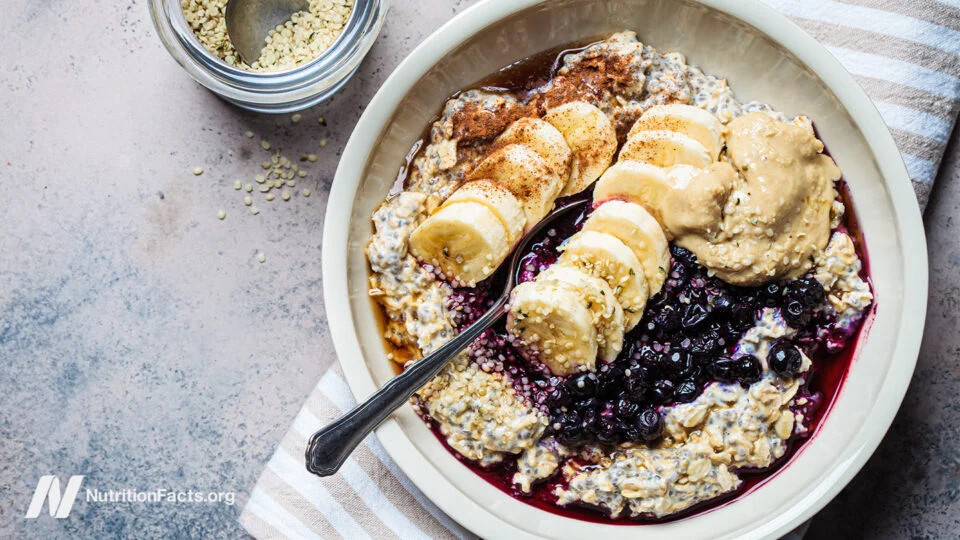
Oatmeal can be paired with fruit and nuts, or prepared ahead as overnight oats or baked oatmeal. Adding cannellini beans is one way to include another source of fiber. For a more varied grain-and-legume bowl, the source suggests BROL: barley, rye, oats and lentils combined in equal proportions, then cooked with two parts water for each part of the dry mixture.
That base can be topped with cherries, cocoa, dates and walnuts or pumpkin seeds, or served with sautéed greens. The practical takeaway is straightforward: oats can fit into a fiber-rich eating pattern, while the short-term diabetes findings call for careful interpretation and medical guidance when medication is involved.