Indian Americans have helped fill skilled jobs in technology and medicine. Their history also shows how economic demand can coexist with anti-immigrant hostility.
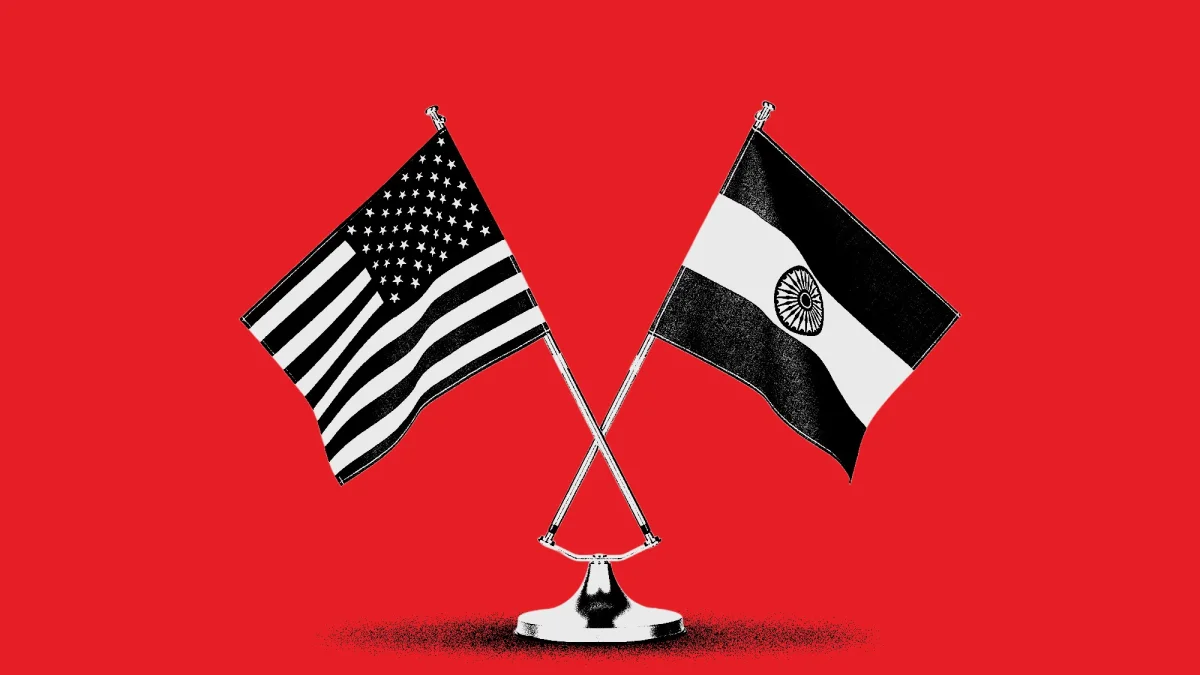
Indian Americans’ success reflects both individual achievement and the opportunities the United States has offered skilled newcomers. Their work has helped meet needs in technology and medicine, while their growing visibility has also made them targets of hostility. The history matters now, as online anti-Indian rhetoric rises and changes to the H-1B visa process affect a route many Indian professionals have used to work in the country.
A fast rise—and growing hostility
Indian Americans are among the country’s most affluent and highly educated groups. Their median household income is $151,200, compared with $92,530 for white Americans. About three-quarters of Indian adults aged 25 and older have a bachelor’s degree, and nearly half have graduate degrees. The poverty rate is 6 percent.
That record has often earned the community labels such as “model minority” and “tech’s new titans.” Yet these labels can flatten a varied community into a single story of success—and obscure the discrimination its members face. Stop AAPI Hate reports that nearly half of South Asian adults in the United States experienced a race-based hate act in 2025. From 2023 to 2025, the use of anti–South Asian slurs online rose by 109 percent. Anti-Indian rhetoric has also become more visible on platforms such as X, YouTube and Reddit.
Visa restrictions add another pressure. Indian nationals receive about 70 percent of H-1B visas, a legal route to jobs in the United States. Two judges blocked a $100,000 fee proposed for the visa, but the Trump administration has said applications at the largest IT staffing and outsourcing firms fell by 92 percent. That decline was described as a success by the administration, though the figures cited concern those firms rather than all applicants.
Indian immigrants make up about 1.5 percent of the U.S. population, but their rapid growth and prominent roles can make them especially visible. Census figures cited in the source show fewer than one million Indians living in the country in 1990. Their numbers doubled over the following decade, during a hiring surge for engineers preparing for the Y2K computer transition. Today, about 5.2 million people of Indian origin live in the United States, more than 60 percent of them born in India.
How U.S. labor needs shaped immigration
U.S. immigration has repeatedly shifted in response to labor demand, with acceptance often giving way to exclusion when economic conditions change. In the 1850s, Chinese workers were recruited for mines, farms and railroads. During the economic downturn of the 1870s, resentment over jobs contributed to the Chinese Exclusion Act of 1882, which restricted Chinese immigration for six decades. Japanese and Korean workers encountered similar hostility, and a 1917 law barred immigration from much of Asia.
Suspicion also targeted European newcomers described at the time as “undesirable,” including Italians and Eastern European Jews. The foreign-born share of the U.S. population fell from 14.7 percent in 1910 to 5.4 percent in 1960. In 1965, the Immigration and Nationality Act eased older restrictions, partly because employers and institutions needed skilled workers, especially in science, technology, engineering and mathematics.
Two developments helped create demand for Indian professionals. First, the Soviet Union’s 1957 launch of Sputnik spurred major U.S. investment in science and research universities. As the competition for technical expertise intensified, the country looked abroad for engineers. India had begun building the Indian Institutes of Technology (IITs) in 1950 with help from international partners. Their graduates were trained in engineering and English, making them well suited to fill U.S. vacancies.
India had hoped these engineers would support development at home, but the country offered too few jobs for the available talent. The IITs remain highly selective, admitting fewer than 1 percent of roughly one million applicants a year. Google CEO Sundar Pichai, venture capitalist and Sun Microsystems co-founder Vinod Khosla, and IBM CEO Arvind Krishna are among their graduates. Indian engineers arrived in a first major wave after 1965 and another during preparations for the Y2K transition in the late 1990s.
Doctors filled another urgent need
The second demand was for medical staff. Medicare and Medicaid expanded access to health care in 1965, making about 20 million Americans eligible. Hospitals needed more workers, while the Vietnam War drew medical personnel away and disabled veterans returned needing long-term care. Medical professionals trained in India helped fill those gaps. Indian doctors later worked on the front lines of the AIDS epidemic in the 1980s and the coronavirus pandemic in the early 2020s.
The United States has benefited from this expertise without paying for most of the training. Many Indian professionals have earned advanced degrees in America, but much of their education took place in India. In that sense, India and other less wealthy countries have borne part of the cost of training workers who later help meet U.S. needs.
The story links two national goals from the 1960s: John F. Kennedy’s push for space exploration and science, and Lyndon B. Johnson’s effort to expand health care for older and poorer Americans. Both depended in part on talent recruited from abroad. The current debate over Indian immigrants therefore reaches beyond individual visas. It raises a practical question about how the United States will meet future needs in research, technology and health care—and whether it will keep welcoming the people who have helped fill them.