A study of more than 52,000 people found that CT scan patterns were linked to lab results and diagnoses, but clinical usefulness remains unproven.
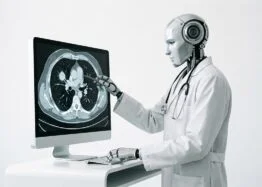
Routine CT scans may contain clues about a person’s health beyond the condition the scan was ordered to investigate. In a study using records from more than 52,000 people, researchers developed an artificial intelligence model that linked scan patterns with laboratory results, recorded diagnoses and later documented health problems. The findings point to a possible new use for imaging, while leaving open whether the model can help clinicians make better decisions in practice.
The model, called Percival, was developed by researchers at the University of Pennsylvania and described in npj Digital Medicine. It learned from more than 400,000 CT image volumes paired with radiology reports. The scans came from multiple body regions and included different scanner manufacturers and imaging protocols, with and without contrast. This variety matters because a model intended for broad use needs to recognize patterns across more than one type of scan.
What the model learned from scans
Percival is a vision-language model, meaning it was trained using both images and their related written reports. Its 86 million parameters were trained to match each scan with its report. From that process, the model creates a numerical representation of a scan, called an embedding, that summarizes image patterns it has learned.
As an initial check, researchers looked at whether these representations reflected basic differences between patients. They found that the embeddings captured information associated with age, sex and body size. Links with vital signs such as blood pressure, pulse, oxygen saturation and breathing rate were weak. So the model appeared to encode some meaningful information about patients, but it did not capture every kind of health measure equally well.
The team then compared the scan representations with dozens of laboratory measurements taken within 60 days of imaging. After accounting for the large number of comparisons, they found links with 35 measurements. These included tests related to kidney and liver function, blood-cell counts, inflammation, glucose and lipid metabolism.
That result suggests CT images may carry signals related to health beyond visible structural changes in a particular organ. But a statistical link is not the same as a reliable estimate. When researchers asked Percival to predict laboratory values directly, its performance was generally weak. It showed some predictive ability for albumin, hemoglobin and creatinine, but the results do not support using CT scans as a substitute for blood tests.
Links with diagnoses and later records
The researchers also examined whether the image representations were associated with diagnoses across different areas of medicine. They reported associations with 351 diagnosis categories, including conditions involving the heart and blood vessels, lungs, cancer and metabolism. These were conditions documented or diagnosed around the time of the scan.
They also found that some scan patterns were associated with a higher number of diagnoses recorded after imaging. To investigate individual conditions, the team trained classifiers to distinguish people with and without specific diagnoses in their records. Percival performed better than CT-FM, another AI model that had been trained on scans without paired radiology reports. Its strongest results were for atrial fibrillation, coronary atherosclerosis, heart failure and pancreatic cancer.
Some of these conditions, including atrial fibrillation, are not usually diagnosed through CT alone. That makes the result intriguing: patterns elsewhere in an image might carry information that relates to a condition assessed through other clinical means. It does not establish that a CT scan can confirm such a condition, or that the model can replace the usual tests and clinical evaluation.
For predictions of diagnoses recorded later, Percival also outperformed the image-only model and approaches based on organ measurements or on age and sex. Its strongest results were for heart failure, cirrhosis and acute kidney failure.
There is a key limit to interpreting “later” diagnoses. The researchers did not exclude diagnoses entered shortly after the scan. Some predictions may therefore have identified a condition that was already present but had not yet been formally recorded. The findings show an association with subsequent documentation; they do not demonstrate that the model can forecast illness years before it begins.
What the findings mean for care
The study supports the idea that medical images could contribute information to broader assessments of health, especially when considered alongside other records. A model that flags a pattern for review might eventually help clinicians notice a concern that was not the original reason for imaging. That possibility is different from demonstrating that using the model improves diagnosis, treatment or patient outcomes.
The researchers did not directly compare Percival with radiologists. The study therefore does not show that the model reads scans better than a human specialist, or that it improves the interpretation of the specific problem a scan was ordered to examine. It also does not establish that the model is ready for routine clinical use. Further assessment would need to show how it performs with patients and scan types beyond the records used in this study, and whether any flagged patterns lead to useful follow-up.
For patients, the practical takeaway is modest: a routine scan may contain patterns that researchers can connect with more than the immediate clinical question, but this tool remains an area of research. A model-generated association is not a diagnosis. Anyone with questions about a scan result or a health concern can discuss it with their clinician, who can interpret the imaging alongside symptoms, examination findings and other tests.
The next step is to test whether these broad signals hold up in clinical settings and add useful information to the work of radiologists and other clinicians. Until then, Percival’s results are best understood as evidence that CT images may contain more health-related information than current reading practices routinely capture.
Study: Beeche, C. A., Kim, J., Tavolinejad, H., Zhao, B., Dong, J., Sharma, R., and colleagues. “Generalizable CT vision-language modeling for population health and disease risk.” npj Digital Medicine, 2026. Read the study.