H. pylori is a major stomach cancer risk, but infection alone doesn’t explain regional differences. Research also points to salt-preserved foods.
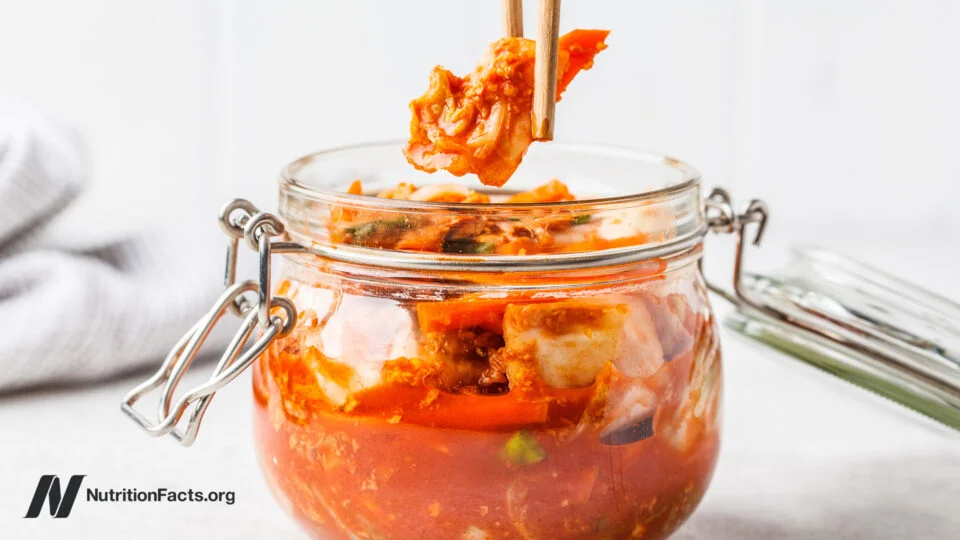
Stomach cancer patterns in Japan and Korea suggest that infection with H. pylori may be only part of the explanation. The bacterium is a well-established cause of stomach cancer, yet infection is common in places where the disease is less frequent. Research comparing diets points to another possible contributor: heavily salted and preserved foods, including pickled vegetables. The evidence raises a useful question about dietary patterns, but it doesn’t establish that a particular food causes cancer in an individual.
Infection matters, but it doesn’t explain every difference
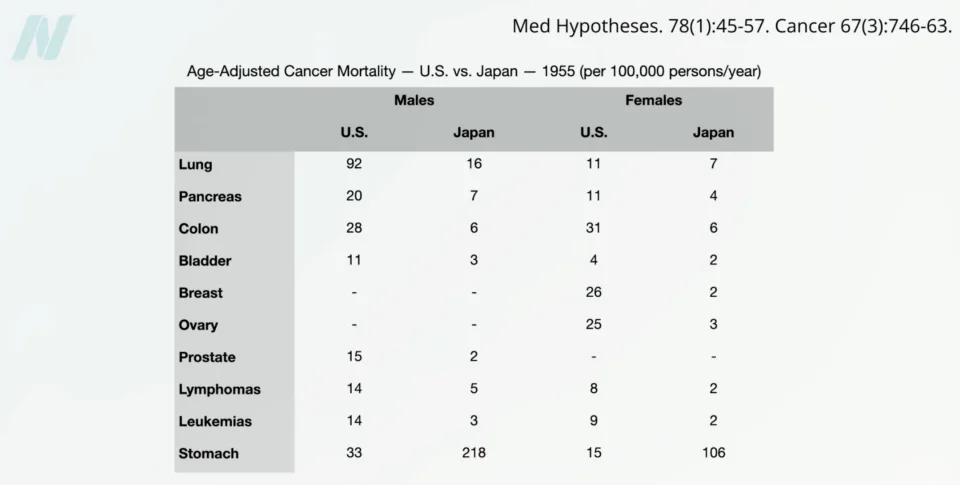
Japan has long had high life expectancy and comparatively low rates of several cancers, including colon, breast, ovarian, prostate, bladder and blood cancers. Stomach cancer is a notable exception. Historical comparisons have found substantially higher rates in Japan than in the United States, including a reported sixfold difference among men. Research on cancer patterns has also prompted questions about whether diet contributes to that contrast.
One early explanation focused on talc once used to polish white rice, but the available evidence did not support it as the cause of Japan’s stomach cancer rates. Genetics also seems insufficient to explain the pattern: studies of Japanese people who moved to other countries found that stomach cancer rates declined as their families adopted more Western diets and lifestyles.
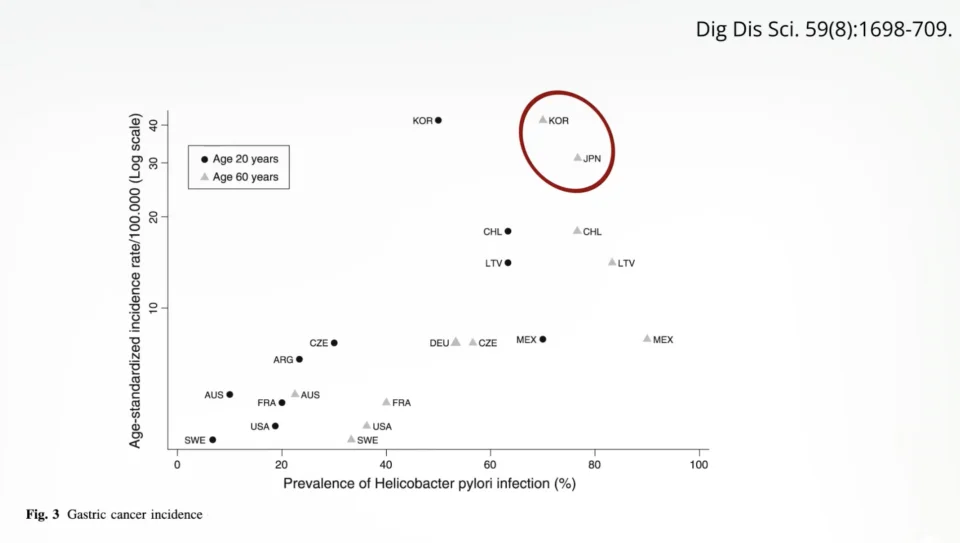
The strongest established risk factor is H. pylori, a bacterium that can infect the stomach lining and cause long-lasting inflammation. That inflammation can contribute to changes that lead to cancer. The infection is classified as a Group 1 carcinogen, reflecting strong evidence that it can cause cancer. Japan and Korea have both high infection rates and high stomach cancer rates, a pairing that initially seemed to account for the regional pattern.
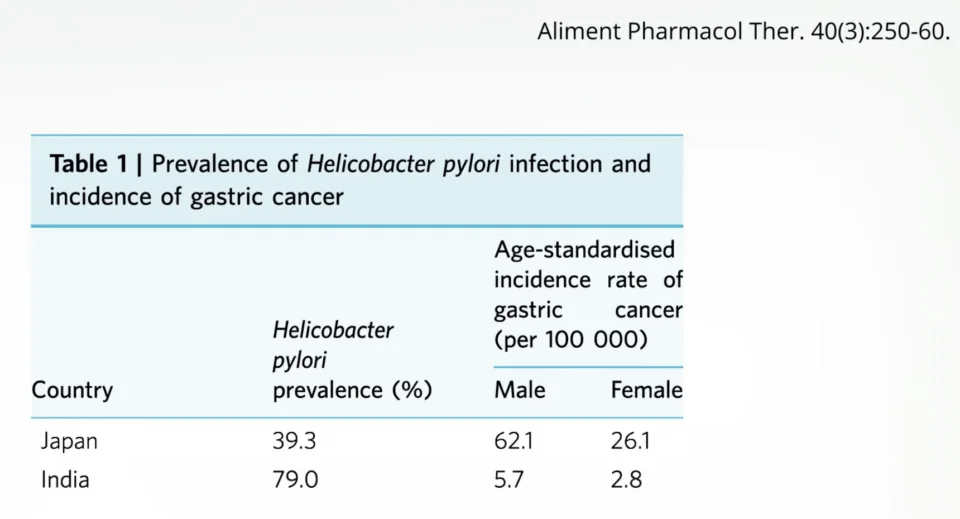
But the comparison doesn’t hold everywhere. Some countries, including Nigeria, have reported higher H. pylori infection rates alongside much lower stomach cancer rates than Japan. The same puzzle appears in India, where infection has been reported as twice as common as in Japan, while stomach cancer is about ten times less frequent. These population-level contrasts suggest that infection alone can’t explain why rates differ so widely.
Many people carry H. pylori without developing stomach cancer. The source estimates that roughly half of adults worldwide are infected, while only a small proportion develop the disease. That makes other influences worth studying, including the foods people eat and how those foods are prepared. It also means that infection and diet shouldn’t be treated as a simple one-to-one prediction of an individual’s risk.
Preserved foods are one possible co-factor
Studies comparing diets in Asian populations have associated salted, preserved fish and vegetables with higher stomach cancer rates. In contrast, eating fresh vegetables and fruit was associated with 85% lower odds of stomach cancer in one comparison. Fresh fish did not appear to be associated with higher or lower risk. These findings describe relationships in groups; they don’t show that one meal or one food choice determines whether someone will develop cancer.
A review of 60 studies found that pickled-food consumption was associated with higher stomach cancer rates. The association appeared stronger in Korea than in Japan. One proposed explanation is that per-person consumption of salt-fermented vegetables, such as kimchi, is five to eight times higher in Korea. That comparison can suggest a research direction, but it cannot by itself show that kimchi accounts for the difference. Food habits, infection patterns and other factors may vary together.
Laboratory work offers a possible mechanism: extracts from pickled vegetables have caused DNA damage in cells grown in a dish. A small human experiment looked at the stomach lining directly. Researchers in Vancouver gave participants 30 ounces of either fukujinzuke, vegetables pickled in soy sauce, or pickled cucumbers over three days. Stomach biopsies were normal before the experiment. After participants ate fresh carrots or cucumbers, biopsies were also normal; after the pickled vegetables, researchers found moderate to severe tissue abnormalities that suggested irritation.
This short experiment provides evidence about stomach irritation over several days, not proof that pickled foods cause cancer. It was also a brief exposure study, so it can’t establish what happens with long-term eating habits. The distinction matters: cell damage and tissue irritation can help explain how researchers are thinking about a possible pathway, but they aren’t the same outcome as cancer.
Salt and food type may both matter
Salt isn’t considered a direct carcinogen in the evidence described here. Researchers have proposed that high salt intake may weaken the stomach’s protective lining, reduce its mucus barrier, or make it easier for H. pylori and other potentially harmful compounds to affect the tissue. Studies have associated even moderately high salt intake with increased stomach cancer risk. In Japan, one analysis suggested that the relationship may be concentrated among people who already have H. pylori-related inflammation.
Fermentation and salt content shouldn’t be collapsed into a single category. Research in Japan has associated non-fermented soy foods, such as tofu, edamame and soymilk, with lower stomach cancer risk. It found no such association for fermented soy foods, including highly salted miso. Researchers have suggested that isoflavones in soybeans may have anti-inflammatory and antioxidant effects, though these observations don’t establish that soy foods prevent cancer.
The evidence points to a combination of influences: H. pylori infection, chronic inflammation and dietary exposures may interact. Preserved foods and salt are plausible contributors, but the studies described here vary in design and strength. Population comparisons can identify patterns, while laboratory studies and brief feeding experiments can suggest mechanisms. None of these findings alone can measure a person’s risk or show that avoiding one food will prevent disease.
H. pylori infection is generally treated with a combination of antibiotics. The research here doesn’t establish a diet that can eradicate the infection or replace clinical care. People with questions about stomach symptoms, testing or treatment can discuss them with a doctor or pharmacist. Future research will need to clarify how infection, salt intake and different kinds of preserved foods interact over time.
Related background: The Role of Kimchi and H. Pylori in Stomach Cancer, The Best Foods to Fight H. Pylori, and Is Miso Healthy?