Research suggests muscle gain and fat loss can happen together, especially near maintenance, though results depend on training and body composition.
Gaining muscle while losing fat is possible, and it doesn’t always require a calorie surplus. Research on resistance training suggests that people eating around maintenance can gain lean mass, while some studies report muscle growth alongside fat loss. For experienced lifters, changes may be slow, but the evidence doesn’t support treating a bulk or a cut as the only options.
What the research says about calories and muscle growth
Studies comparing resistance training during a calorie surplus with training at maintenance generally find similar or slightly greater gains in muscle size with a surplus. Extra energy may support recovery, replenish glycogen, and make it easier to sustain demanding training. But the difference between a modest surplus and maintenance appears smaller than many people expect.
Some studies measure lean body mass as a stand-in for muscle growth. That measure can shift for reasons besides new muscle tissue, including changes in stored glycogen and water. So an increase in lean mass during a surplus doesn’t necessarily mean the surplus produced more muscle.
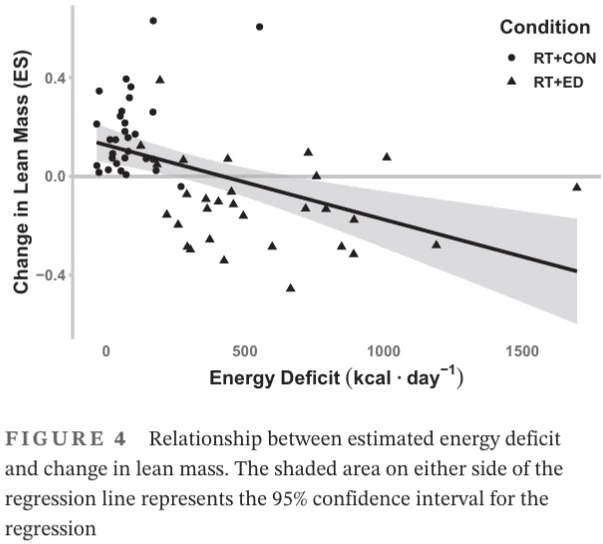
A meta-regression by Murphy and colleagues examined 52 resistance-training studies. It found that a calorie deficit clearly reduced muscle gain, while many participants eating around maintenance still increased lean mass. Across resistance-training studies more broadly, participants often follow their usual diets rather than a prescribed calorie target. Body weight may remain fairly stable even as reported muscle size rises and fat mass falls.
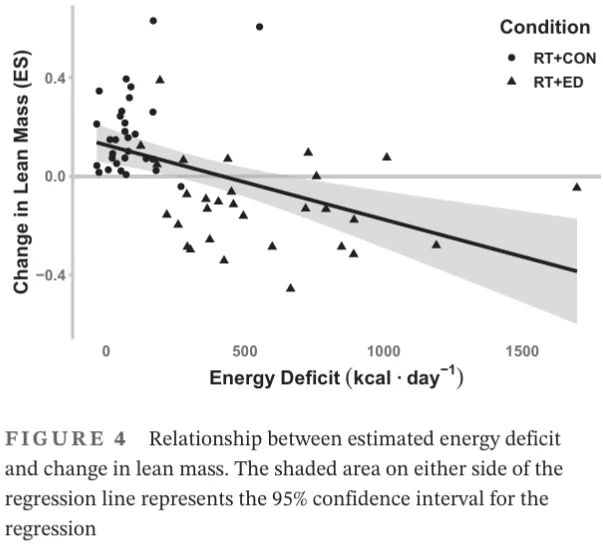
These findings support a measured conclusion: recomposition can happen at maintenance, but its pace and scale vary. A calorie surplus may improve muscle gain for some people, while maintenance can offer a balance between muscle growth and fat loss.
Why muscle gain doesn’t demand a large surplus
Building muscle uses energy, but the amount needed to create new muscle tissue is small compared with typical day-to-day calorie intake. A review by Slater and colleagues estimated the metabolic cost of adding skeletal muscle at about 12.7 to 19.5 kilojoules per gram, or roughly 3 to 4.6 kilocalories per gram. The tissue itself also contains energy, with estimates around 16.7 kilojoules per gram of protein.
Using those figures, the source article estimates that an intermediate lifter gaining 2 to 4 pounds of muscle in a year would need about 3,450 to 9,800 extra kilocalories across the year to deposit that tissue. Averaged over a day, that is about 9 to 27 kilocalories. These are estimates, not a precise personal target, and real muscle gain varies widely.
The practical point is that this daily energy requirement is too small to target reliably through food tracking. Nutrition labels and estimates for mixed meals have unavoidable margins of error. The energy can also come from stored sources in the body, including fat and glycogen. Muscle building, by itself, therefore doesn’t establish a need for a measurable surplus each day.
Energy balance is a range of trade-offs
It can be more useful to think of cutting, maintaining, and bulking as positions along a range rather than separate modes. A calorie deficit tends to increase fat loss but can limit muscle gain, and a larger deficit may contribute to muscle loss. Eating around maintenance may allow more moderate fat loss and muscle gain at the same time. A surplus can support faster muscle growth, while also making some fat gain more likely.
Where someone sits on that range depends on factors such as training quality, recovery, and current body composition. People with more body fat have more stored energy available, which may make it easier to gain muscle while losing fat. People who are already very lean may find that maintenance limits their progress and that a surplus better supports muscle growth.
Training experience matters, though the evidence is incomplete. Many studies involve people who are relatively new to training or have some experience but aren’t advanced. Muscle growth usually slows as training experience increases, so recomposition may be less noticeable in advanced lifters. That makes progress slower, not necessarily impossible; both gaining phases and maintenance-based approaches tend to produce smaller returns over time.
Setting expectations and choosing an approach
Recomposition is a reasonable possibility, but it isn’t a promise of rapid change. Someone near or above their usual long-term body weight may find it easier to lose fat while building muscle than someone who is already very lean or substantially below the weight their body tends to maintain. Individual responses differ, and the studies don’t establish a single eating pattern that works best for everyone.
A dedicated surplus may suit someone who is relatively lean and accepts the possibility of gaining some fat in exchange for faster muscle growth. Someone who prefers slower changes or is already near a comfortable target weight may favor eating around maintenance while following a consistent, progressive resistance-training plan. These are general trade-offs, not a reason to make abrupt changes to eating or exercise.
For people managing a medical condition, recovering from illness, or unsure how a change in eating could affect their health, a doctor or registered dietitian can help put the evidence in context. The key takeaway is that a surplus can help, but it isn’t a strict requirement for muscle gain. Training progress, recovery, and a realistic time frame matter when judging whether body recomposition is working.