A new squat study found greater growth with eccentric overload, but earlier trials and practical limits make its advantage uncertain.
Adding weight to the lowering phase of a lift sounds like a straightforward way to prompt more muscle growth. A recent squat study found greater growth with this approach, but earlier research has generally shown similar results with standard training. Taken together, the evidence doesn’t establish that eccentric overload is a reliable way to build more muscle.
The technique, also called accentuated eccentric training, increases resistance while a muscle lengthens during the lowering part of a lift. In a standard squat, the same load is used as you lower and then stand. With eccentric overload, the load is heavier on the way down and lighter on the way up.
What the new squat study tested
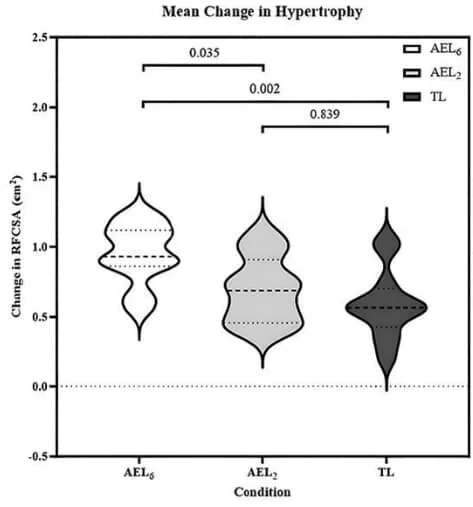
Yue and colleagues compared three squat routines. Participants completed four sets of six repetitions. One group used standard squats; another used detachable weight releasers on two repetitions per set; and a third used them on all six repetitions. The releasers held extra plates on the bar during the descent and dropped away at the bottom, reducing the load for the ascent.
When the releasers were used, the eccentric load was set at 120% of each participant’s one repetition maximum, while the concentric load was 75%. The researchers reported greater growth in the rectus femoris, a muscle at the front of the thigh, in the eccentric overload groups.
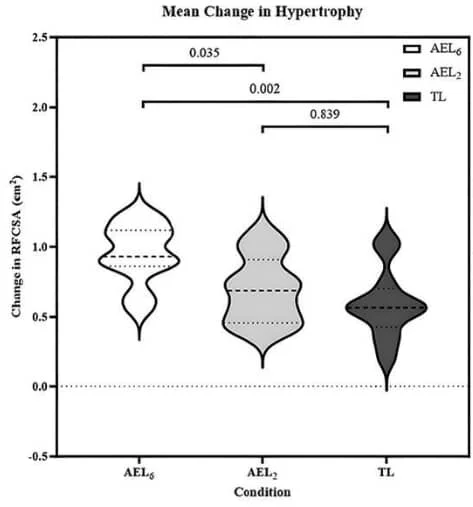
That result is promising, but it needs careful interpretation. The study measured the cross-sectional area of the rectus femoris, which works across both the hip and knee. That makes it a less straightforward muscle to assess in a squat study than a muscle that acts primarily at one joint. The reported finding also doesn’t settle whether eccentric overload produces more growth across other muscles, exercises, or training programs.
How this fits with earlier research
Earlier studies have not consistently found an extra muscle growth benefit. In a 12-week study of trained rugby players by Douglas and colleagues, one group used squats with eccentric loads about 20% heavier than the concentric load. That group showed early improvements in strength and sprint speed, but quadriceps muscle thickness didn’t increase in either group.
Other longer-term comparisons have likewise reported similar muscle growth with traditional training and accentuated eccentric loading when the groups performed a comparable number of sets. Those results don’t prove the approaches are identical in every setting. They do, however, make it harder to conclude that heavier lowering loads offer a dependable advantage for hypertrophy.
There’s also a practical explanation for why a heavier descent might not translate into more growth. Extra resistance during the lowering phase can increase fatigue, which may limit the repetitions or total work a person can complete. The additional tension in one part of each repetition could be partly offset by doing less work elsewhere in the set. That’s a useful way to think about the results, though it doesn’t establish exactly why the studies differ.
What it means for training
For most people focused on muscle growth, the current evidence doesn’t make eccentric overload a necessary addition to a training routine. Standard resistance training already includes a lowering phase, and the existing studies suggest it can support muscle growth without extra equipment or a heavier eccentric load. The new study raises a question worth following, rather than providing a settled answer.
Equipment and setup also matter. Weight releasers can make it possible to lower a heavier bar and then lift a lighter one, but using them safely for free-weight exercises can require space, setup time, and partners to reattach the hooks between repetitions. That may be manageable in some training facilities and inconvenient in others.
Motorized equipment, such as the Voltra mentioned in the source article, can adjust resistance during a movement and may make this type of training easier to set up. These devices remain expensive and uncommon. Some machine exercises can also be adapted by lowering the weight with one arm or leg and using the other to help with the lift, but how practical that is depends on the machine and exercise.
Any change that substantially increases the load during a lift’s lowering phase can affect fatigue and control. People with an injury, health condition, or questions about whether a particular exercise suits them can discuss their training with a qualified health professional. For those without a specific reason to change their approach, the research doesn’t show a clear need to add eccentric overload. The key question for future studies is whether the growth advantage reported in this squat trial appears reliably in other muscles and training programs.