Across one review of new cancer drugs, the average survival gain was 2.1 months. Clear conversations about benefits, risks and uncertainty matter.

For many newer chemotherapy drugs, the average extension in overall survival has been measured in weeks or a few months. That figure can matter deeply to an individual, but it needs context: what the treatment can and cannot do, the chance of side effects, and how a person values time and quality of life.
A review of cancer drugs approved over a 12-year period found an average overall survival benefit of 2.1 months. This is an average across drugs, not a forecast for any one person or cancer. Some treatments may offer more benefit to some patients, while others show little or no improvement in overall survival. A small average gain also does not tell us whether a treatment eases symptoms, delays disease progression, or changes day-to-day well-being.
A statistically clear result can still be a small difference
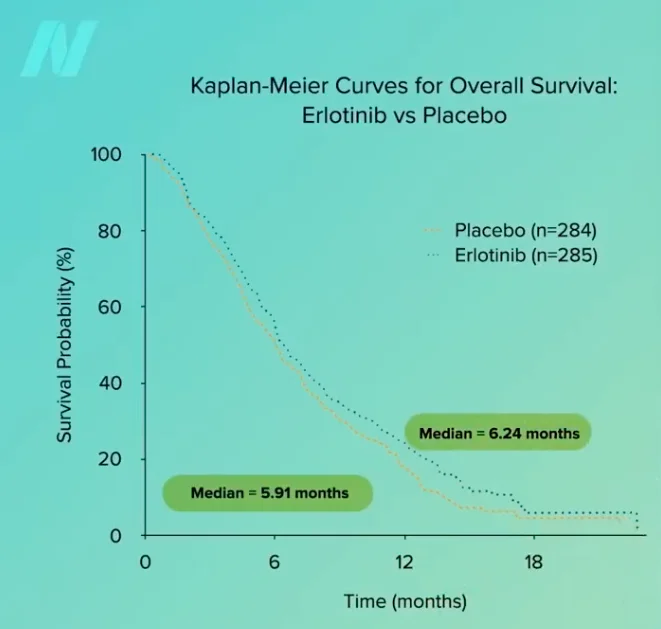
One trial in advanced pancreatic cancer compared gemcitabine alone with gemcitabine plus erlotinib. Median overall survival was 5.91 months in the group receiving gemcitabine and 6.24 months in the group receiving the added drug—a difference of about 10 days between the medians. The trial reported a statistically significant survival improvement, and the added treatment was associated with more side effects.
That result illustrates why statistical significance and practical importance are different questions. A study can provide strong evidence that two groups had different outcomes on average, while the size of that difference remains modest. “Significant improvement” may sound to a patient like a substantial extension of life. The number behind the phrase gives a more useful sense of scale.
These figures also require careful interpretation. A difference between group medians does not predict exactly how long a particular person will live, and it does not mean every patient gains that amount of time. The likely benefit depends on the cancer, the treatment options, the person’s health and the evidence from the relevant study.
Benefit and burden belong in the same conversation
Patients need a clear explanation of whether treatment is intended to cure the cancer, control it, ease symptoms, or extend life. In surveys described in the source research, about three-quarters of people with metastatic lung or colorectal cancer did not report understanding that chemotherapy was unlikely to cure their disease. That misunderstanding can make it harder to weigh the possible benefits against the burdens.
For some people, even a short chance of more time may justify difficult side effects. Others may place greater value on avoiding treatment burdens or protecting the quality of the time they have. The source describes patients expressing both views: one considered an extra week worthwhile, while another would decline chemotherapy even if it offered two more years. Those preferences aren’t problems to resolve; they are part of an informed choice.
Many chemotherapy drugs are cytotoxic: they damage or kill cells, including cancer cells, but can also harm healthy tissue. Depending on the drug, serious effects may involve nerves, the heart, the digestive tract or the immune system. The likelihood and type of harm vary by treatment and patient, so broad descriptions of a drug’s safety can’t replace specific information about the risks relevant to an individual.
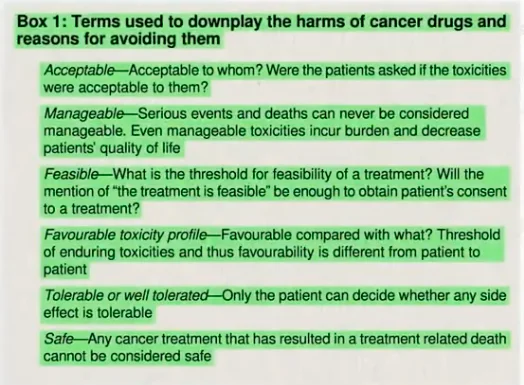
The article also points to published descriptions of side effects as “acceptable,” “manageable,” or “mostly reversible.” Such terms can obscure the details that matter, including how often serious or life-threatening events occurred and whether some patients died. These labels are not a substitute for the underlying results, and “tolerable” is ultimately a judgment each patient must make in light of their own priorities.
Results differ by cancer and treatment
The average survival gain across newer drugs doesn’t describe every cancer. The source highlights testicular cancer and Hodgkin lymphoma as examples where chemotherapy has produced major improvements, including a reported increase of more than one in three in the chance of reaching five-year survival. In contrast, it cites estimates that chemotherapy’s contribution to five-year survival for common cancers such as colon, lung, breast and prostate may be around 1% or 2%. These broad estimates shouldn’t be treated as predictions for an individual or applied to every treatment used for those cancers.
Evidence about a drug can also change as further studies are completed. The source notes that some post-approval studies have found no clinically meaningful benefit compared with placebo or observation, while the drugs remained available. It also describes a high-cost drug in the studies it discusses that did not improve overall survival and was associated with worse quality of life. These examples underline why a treatment’s price, approval or presence in clinical practice doesn’t by itself establish how much it helps a particular patient.
Questions that make the evidence clearer
When considering chemotherapy, patients and families can ask their oncologist or pharmacist what outcome the treatment is expected to improve, how large that improvement was in studies, and whether the result applies to their cancer and circumstances. It can also help to ask whether the treatment is curative, what serious side effects occurred, how treatment might affect daily life, and what options exist for symptom relief or supportive care.
Two months can be meaningful; so can avoiding a treatment that conflicts with someone’s priorities. The useful next step is a specific conversation about likely benefits and harms, with numbers and uncertainty explained plainly, so that the decision reflects the person receiving care.