Microlives put meat and lifestyle risks into perspective, but these population estimates don’t predict how long any one person will live.
Comparisons such as “one burger costs 30 minutes of life” can make long-term health risks easier to picture. But a microlife is a way to express averages from population data, not a countdown for an individual. That distinction matters when weighing estimates about meat, smoking, weight and exercise.
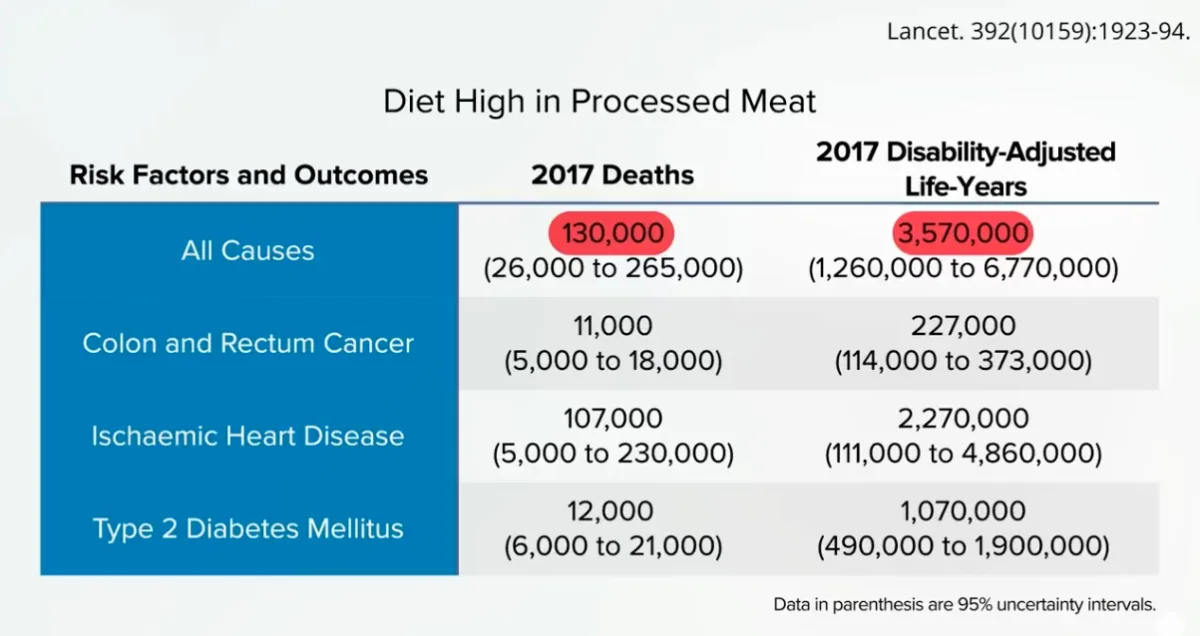
Research drawing on the Global Burden of Disease Study has linked diets high in processed meat—including bacon, ham, hot dogs, deli meat and sausage—to more than 100,000 deaths a year worldwide. The deaths were attributed largely to heart disease, as well as cancer and diabetes. These are population estimates: they describe patterns across groups and do not show that a particular food caused a particular person’s illness or death.
Even a modest reduction in processed meat could matter at population scale. The Union of Concerned Scientists estimated that cutting US consumption to about one ounce of processed meat per week could avert thousands of cancer deaths each year. That estimate concerns a broad shift across a population; it can’t tell an individual how much their own risk would change.
What a microlife means
A microlife offers one way to compare gradual risks linked to daily habits. Unlike a micromort, which represents a one-in-a-million chance of sudden death, a microlife represents an average loss of 30 minutes of life expectancy. The measure is based on dividing an estimated remaining lifespan into half-hour units. It’s a communication tool, not a precise forecast for any one person.
For a 30-year-old man, one estimate equates a microlife with smoking two cigarettes, drinking two pints of strong beer, or carrying about 11 pounds (5 kilograms) of excess weight over time. These comparisons can make unlike exposures easier to discuss, but they depend on assumptions about age, population averages and long-term risk. They don’t mean the exposures are interchangeable or that every person will experience the same outcome.
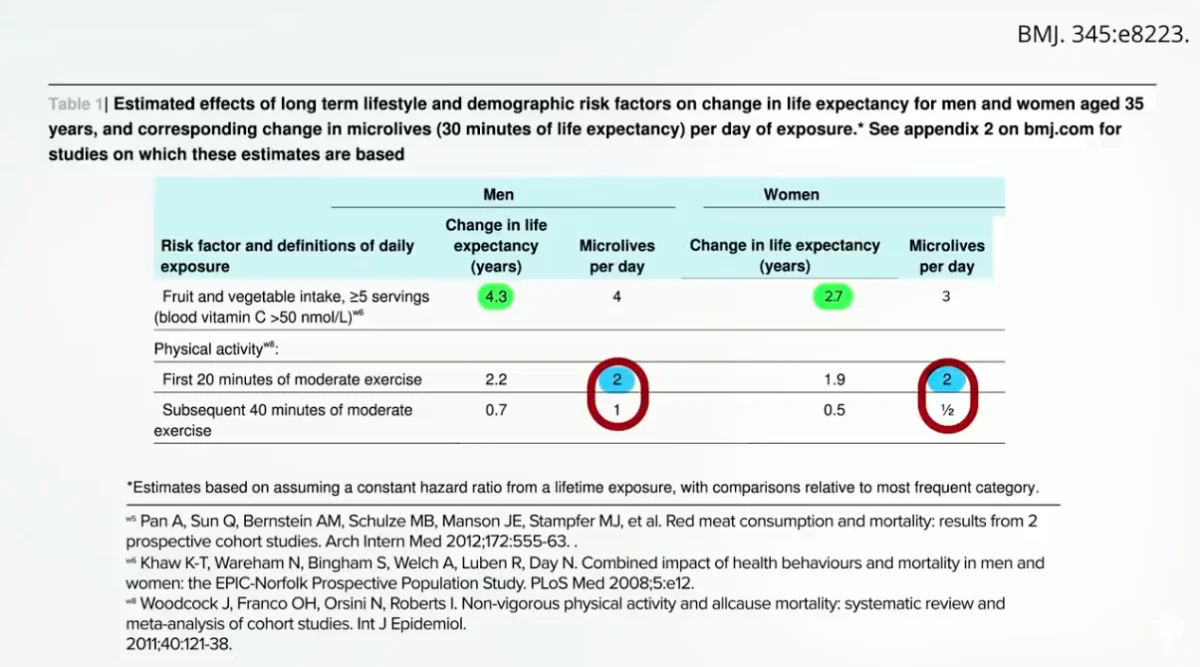
The same approach can describe habits associated with longer life. One analysis estimated that people eating at least five servings of fruits and vegetables daily lived, on average, four years longer for men and three years longer for women. The article also cites an estimate that 20 minutes of exercise corresponded to roughly an hour of added life expectancy—two microlives—with smaller gains as exercise time increased. These figures summarize associations and estimates; they aren’t a guarantee that a given amount of activity will extend an individual’s life by a set number of minutes.
How the meat estimates are framed
One analysis associated each burger with the loss of one microlife, or about 30 minutes of life expectancy. In that framing, a burger was comparable to two cigarettes. This kind of conversion makes a statistical association vivid, but it can also sound more exact than the underlying evidence allows. It doesn’t establish that eating a burger takes exactly half an hour from a particular person’s life.
Estimates for processed meat are more striking. The source describes a comparison between otherwise similar people, one eating about 50 grams daily—roughly a large sausage or several strips of bacon—and one eating none. The daily serving was estimated to correspond to about two years less life expectancy. A separate framing says that two slices of deli meat each day, as in a ham or bologna sandwich, correspond to roughly an hour of life expectancy per day. The same 50-gram daily amount was also described as adding about two years to “effective age,” meaning a level of annual death risk similar to that of someone two years older.
Those figures are model-based estimates, not a record of time taken from someone’s life day by day. They depend on how researchers combine evidence about exposure and health outcomes, and they can’t account for every difference in people’s health, diets or circumstances. The source points to a 13% lower risk of premature death associated with reducing red and processed meat consumption, using figures from the NutriRECS meat papers. That relative difference also doesn’t translate directly into an individual’s chance of avoiding early death.
What to take from the evidence
The NutriRECS papers in the Annals of Internal Medicine drew criticism from nutrition researchers, including a Harvard nutrition department chair and colleagues. They argued that the recommendations had methodological limitations and misread some nutritional evidence. Their view was that dietary guidance should continue to favor patterns low in red and processed meat and rich in minimally processed plant foods, including fruits, vegetables, whole grains, nuts and legumes such as beans, split peas, chickpeas and lentils.
The source also cites the Lifestyle Heart Trial, which studied a plant-based diet and lifestyle program among people with coronary heart disease. It reports that the program reversed disease progression, while a control group that made modest meat reductions continued to show worsening atherosclerosis. This is evidence from a specific study and program; it doesn’t mean that dietary changes alone will reverse heart disease for everyone. People considering changes to their diet or activity, especially those managing a health condition, can discuss their circumstances with a doctor or dietitian.
The practical value of microlives is perspective: they make gradual risks easier to compare and can help frame conversations about everyday choices. Their limits are just as important. Averages describe groups, not personal timelines, and no single food predicts an individual’s lifespan. The broader evidence supports paying attention to overall dietary patterns and making room for minimally processed plant foods.
For another way of comparing risk, the source links to a video about micromorts and anesthesia: Micromorts: How Risky Is It to Go Under Anesthesia?. It also links to more material on longevity and a video about life expectancy.