Studies link modest reductions in red and processed meat with lower health risks, but study design and food replacements shape what the findings mean.

Research on red and processed meat has found health risks even when the differences in meat intake are modest. The harder question is how confidently those findings support dietary advice. A 2019 review panel reached a different conclusion from other nutrition researchers, arguing that the benefits of reducing meat were too small to justify changing eating habits. Critics say the panel’s methods and study choices understated the evidence. The dispute is a useful reminder: a small change in an individual’s risk can matter across a population, but observational findings don’t prove that meat reduction alone caused the difference.
What the studies found
A series of reviews published in the Annals of Internal Medicine examined evidence on red and processed meat consumption. The studies found statistically significant associations between lower intake and lower risk of death from any cause, cardiovascular disease, and cancer. The panel behind the reviews nevertheless advised that people who eat meat could continue doing so, citing the small size of the observed effects and uncertainty about the evidence.
Those results came largely from population studies, which compare people’s diets and health over time. Such studies can identify patterns, but they can’t by themselves establish that eating meat caused a particular illness or death. Other influences, including broader dietary habits and health differences between people, may contribute. The panel also emphasized that the expected benefit of reducing meat was small for an individual. Researchers who criticized its conclusion argued that modest changes can still have meaningful effects across many people.
The panel gave several reasons for departing from other dietary recommendations. One was that people may value the taste of meat. Critics countered that preference alone is a weak basis for health advice: people may also prefer not to exercise or give up smoking, but preference doesn’t settle what the evidence says about health.
Another point of disagreement was the panel’s use of GRADE, a system for assessing how certain evidence is and how strongly it supports a recommendation. Critics say GRADE was developed mainly around drug trials and may not fit questions about diet and lifestyle, where long-term randomized trials are difficult to conduct. They have warned that giving randomized trials especially high weight can leave evidence from population studies looking less certain than it should. The panel’s approach, in their view, could also affect how evidence about other exposures and behaviors is judged.
What replaces meat matters
Reducing meat doesn’t tell the whole story of a diet. The food that takes its place may change the health implications. One analysis cited by the article found that replacing 3% of calories from animal protein with plant protein was associated with living longer. It also reported that replacing red meat protein with plant protein was associated with more than a 10% lower risk of death from any cause. Replacing egg protein was associated with a reduction of more than 20% in premature death risk.
These findings are associations, not a guarantee that a particular swap will produce those results for an individual. They also show why a simple “less meat” message can be misleading if it doesn’t consider the replacement. Swapping a burger for an egg salad sandwich, for example, wouldn’t match the plant-protein comparisons described in the article.
Questions about the evidence review
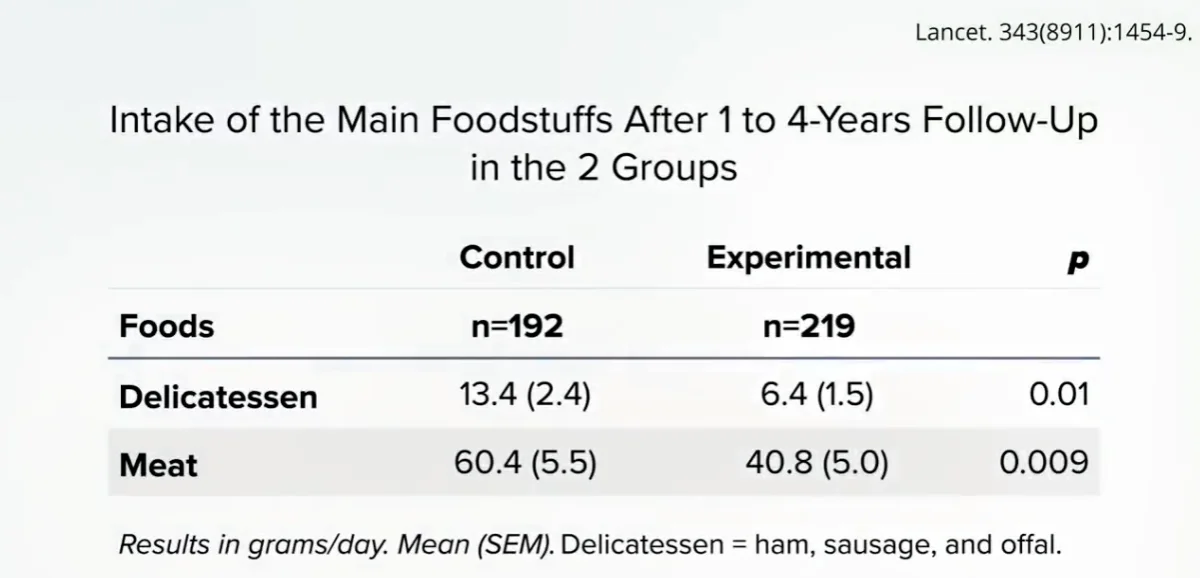
Critics say the panel left out relevant research and rejected trials that could have changed its assessment. They point to randomized studies of dietary patterns, including PREDIMED, the DASH diet trials, and the Lyon Diet Heart Study. That last study compared a Mediterranean-style diet, which included a substantial drop in meat consumption, with a control diet. The article reports that the lower-meat group had 70% lower mortality from all causes combined. The panel excluded the study, describing its treatment effect as “implausibly large.”
That large result deserves scrutiny, but excluding it also makes the reason for the panel’s decision important to the debate. A striking finding may be less reliable than a more modest one; at the same time, researchers need to explain clear criteria for excluding results so readers can assess whether the review captured the relevant evidence.
Critics also note that the panel excluded studies comparing vegetarians with meat eaters, saying it was focused on realistic reductions in meat intake. Its main evidence base included the Women’s Health Initiative, where the difference in meat consumption between groups was about 1.4 servings per week—roughly half an ounce per day, or about one-fifth of a hamburger. Critics argue that a small dietary difference can show only a small effect. That result doesn’t establish that larger differences would have no benefit.
An objection submitted in response to the panel’s conclusions made the point through an analogy: modest reductions in tobacco use could produce modest benefits without showing that tobacco use is harmless. Dr. Dean Ornish made a similar argument, comparing a small difference in cigarette use with a comparison between smoking and not smoking. The analogy illustrates the limits of studies with small exposure differences, though meat and smoking are different exposures and shouldn’t be treated as interchangeable.
Funding and interpretation
The article raises questions about links between members of the NutriRECS panel and Texas A&M AgriLife, which it says receives substantial funding from the meat industry. It reports that the organization partnered with the consortium and that several panel members were on its payroll. Those relationships are relevant context for readers assessing the review, but they don’t establish that a particular finding is wrong. The more direct way to evaluate the panel’s work is to examine its methods, exclusions, and treatment of evidence alongside any potential conflicts of interest.
Despite the panel’s conclusion, the reviews found adverse associations between higher meat intake and death from any cause, cardiovascular disease, and cancer, as well as diabetes. The article cites meta-analyses of large population cohorts in which moderate reductions in red and processed meat were associated with 13% lower total mortality, 14% lower cardiovascular mortality, 11% lower cancer mortality, and 24% lower risk of type 2 diabetes. These percentages describe associations in the reviewed evidence; they aren’t predictions of what an individual will experience after changing their diet.
The article also cites a Harvard nutrition chair’s estimate that a moderate reduction in red meat consumption could prevent 200,000 deaths each year. That figure is an estimate, not an outcome measured in a trial. It conveys why even a modest shift in individual risk might matter at population scale, while leaving room for uncertainty about how much of the effect is due to meat intake itself.
What readers can take from the debate
The evidence described here supports a careful reading: lower red and processed meat intake is associated with several better health outcomes, but the size and cause of those differences remain debated. The studies don’t show that every person will benefit by the same amount, nor do they identify a single ideal eating pattern. The choice of replacement food, the size of the dietary change, and the methods used to assess the research all matter.
For people considering changes to their diet, a clinician or registered dietitian can help account for personal health needs and the overall pattern of eating. The next useful step in the research is clearer comparison of dietary patterns and replacements, with transparent rules for weighing studies. That would help separate the effects of reducing meat from the effects of what people eat instead.
Doctor’s Note
For related background, see How Smoking in 1959 Is Like Eating in 2019.
This is the seventh part of an eight-part series on industry influence and dietary recommendations. The earlier installments are listed in the related posts. The final installment is How Many Minutes of Life Does a Burger Cost?.
Related research and coverage: Harvard summary of the reviews; the panel’s recommendation; discussion of meat and disease risk; analysis of food replacements; and the video accompanying the original discussion.
Further sources cited include coverage of taste preferences and dietary advice, GRADE’s use in evaluating evidence, concerns about its application to lifestyle evidence, and reporting on Texas A&M AgriLife. The Lyon study’s findings and diet are described in its report and an earlier account of the dietary pattern used in the study.
Other perspectives include a critique of the review methods, reporting on the meat panel’s evidence choices from PBS NewsHour, and an account of its industry links from Phipps Conservatory. The Women’s Health Initiative’s dietary change is discussed in The Washington Post. Ornish’s analogy appears in his commentary, and a further critique is available here.
The source also cites a 1959 paper on evidence about smoking and lung cancer: the paper. Estimates and additional discussion of the meat findings appear in CNN and MarketWatch.