Research documents weight stigma across health care and daily life, with potential effects on screening and patient relationships. The evidence also has limits.
This topic can be sensitive for some readers: the source discusses weight bias and discrimination.
Weight stigma in health care matters because it may shape whether people receive preventive care, how much time clinicians spend with them, and whether patients feel respected. Research described here documents bias in several settings, but the studies vary in age and design; they do not establish how often every patient experiences it today or prove that bias alone causes differences in care.
Stigma appears across everyday settings
In a one-week diary study, 50 women who were overweight recorded more than 1,000 instances in which they felt stigmatized because of their weight. The researchers estimated that participants encountered such experiences about three times a day on average. Examples included insults, physical barriers such as seats that did not fit, and what participants perceived as poorer service. A separate study found that men with obesity reported discrimination less often than women of similar size, though the source does not provide enough detail to determine how broadly that difference applies.
These reports are consistent with experiments in which professional actors applied theatrical prostheses to appear heavier while posing as job applicants. They encountered more employment discrimination in the heavier appearance condition, with a larger disadvantage reported for women than for men. The experiment offers evidence that appearance can affect judgments in a controlled setting; it does not measure every influence on real hiring decisions.
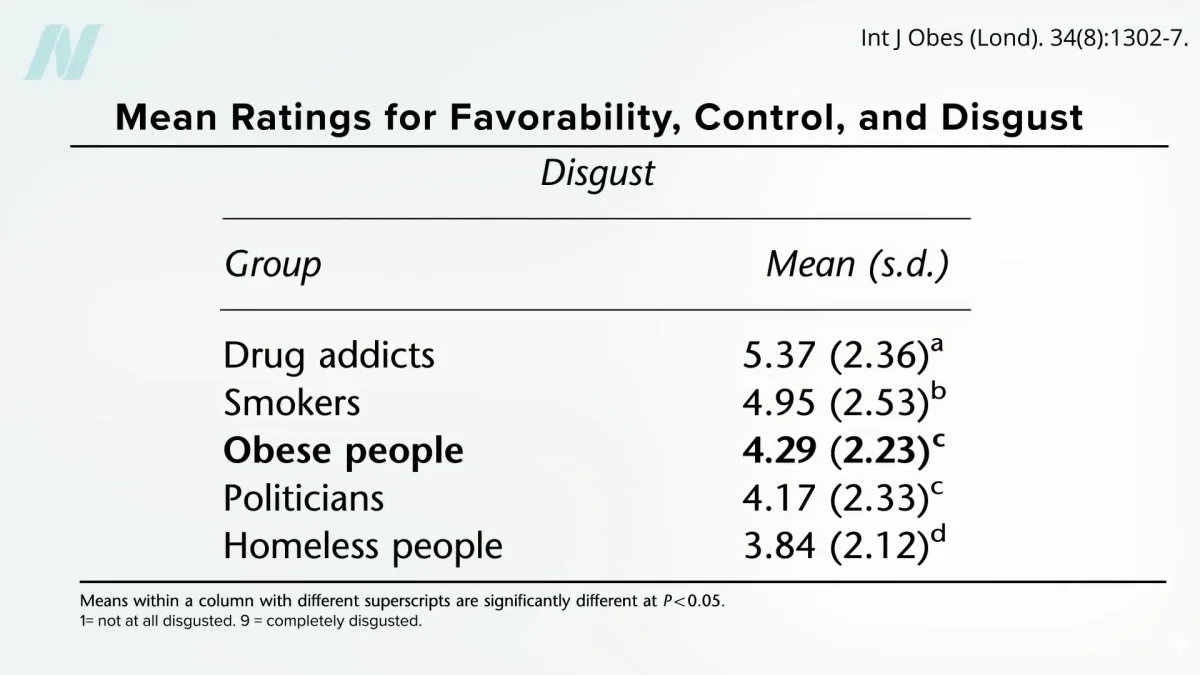
Survey research has also asked people to rate different social groups. In one comparison of 16 groups, respondents rated people with obesity as more disgusting than most of the groups assessed, with people who use drugs and smokers rated higher. The researchers said the rating was effectively tied with that for politicians. These results describe the views of survey respondents at the time; they are not a measure of how every person thinks.
Children can absorb negative stereotypes early
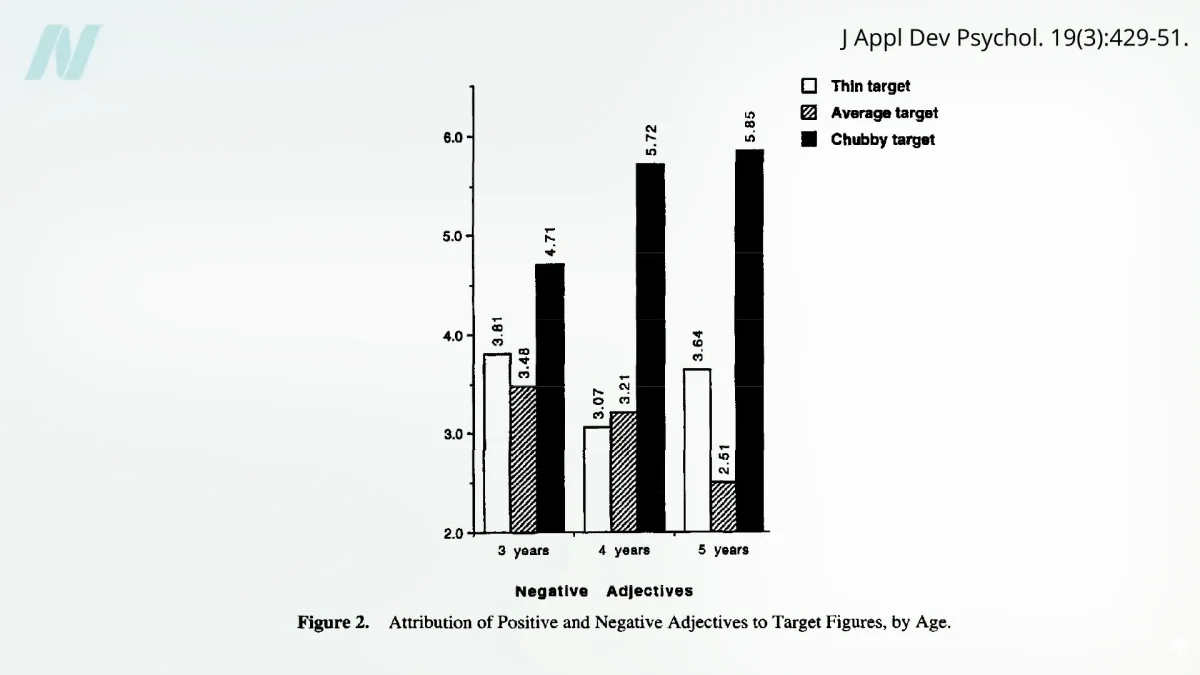
Studies cited in the source suggest that weight-based judgments can emerge in early childhood. Children as young as three described peers with obesity using negative terms such as “mean,” “stupid,” “lazy,” and “ugly,” and researchers reported more negative language as children grew older.
A study published in 1961 asked children in camps and schools in California, Montana, and New York to rank pictures of children with different visible characteristics and disabilities. Across the groups tested, the child depicted with obesity was ranked least liked. A 2003 follow-up reported that children in its sample rated that child even less favorably than the earlier participants had. The studies point to persistent stigma in those samples, but differences in participants and methods make it difficult to treat the comparison as a precise measure of change across all children.
Other findings cited here raise questions about the wider environment around children. More than one-quarter of surveyed teachers and school staff agreed that becoming obese would be among the worst things that could happen to a person. One study also found parents offered less college support to daughters who were overweight than to their thinner siblings. These results come from particular surveys and should not be read as descriptions of every teacher or family.
What the health care studies suggest
Several studies have documented negative attitudes among health professionals. In a national survey, more than half of physicians described patients with obesity using terms such as awkward, unattractive, ugly, or noncompliant. In another survey, about one-quarter of nurses agreed or strongly agreed that caring for a patient with obesity usually repulsed them. Such surveys capture reported attitudes, not necessarily how each clinician behaves in a particular appointment.
Clinical studies offer some evidence that weight may influence care. In an experiment, physicians were given a chart describing a migraine patient whose weight category varied. Physicians said they would spend about 28% less time with the patient described as having obesity than with the average-weight patient. Recordings of actual visits have also found less emotional rapport in conversations with patients who were overweight or had obesity. These findings suggest possible differences in attention and communication, though they do not show that every visit follows the same pattern.
Access to screening is another concern. The source reports that women with obesity face higher risks of cervical, endometrial, and ovarian cancers, while studies have found lower rates of some recommended screening and pelvic exams among heavier women. A newspaper survey of obstetrics and gynecology practices in Florida reported that as many as one in seven declined to see heavier women, with some practices setting weight limits for new patients starting at 200 pounds. That local survey is not a current, nationwide estimate. The cited research also notes that patients may avoid care, and the available information does not isolate the contribution of each factor.
Even clinicians who accept patients with obesity may bring assumptions into care. A study of obesity specialists found that surveyed attitudes became more negative between 2001 and 2013, including stronger associations between fatness and traits such as laziness, stupidity, and worthlessness. The study reflects the specialists who participated and the period examined; it cannot establish the attitudes of all specialists now.
Respect is part of the care relationship
One study found that patients with obesity rated their physicians’ respect more positively than researchers expected, despite evidence of negative attitudes among some clinicians. Its authors cautioned that outwardly appropriate behavior may not mean a relationship feels genuinely respectful. Patient satisfaction is meaningful, but by itself it cannot reveal all the assumptions or communication patterns that shape an appointment.
For patients and families, these findings offer a reason to raise concerns when weight becomes the focus at the expense of the health issue that brought someone to care. It can be reasonable to ask a doctor or pharmacist how a recommendation relates to a specific symptom, screening need, or treatment decision. The research reviewed here supports taking respectful communication and access seriously, while leaving open how widespread particular experiences are and which approaches best reduce bias.
This discussion is part of a two-part series, with the companion post The Burden of Weight Bias. Both posts draw on the book How Not to Diet. The source also links to a video, Weight Bias: Hating Their Guts.