A micromort represents a one-in-a-million chance of death. The unit can make risks easier to compare, but estimates need context.

Small probabilities are hard to picture, especially when weighing a medical procedure against familiar activities. A micromort offers one way to put those risks on a shared scale: one micromort means a one-in-a-million chance of dying. The unit can make comparisons clearer, though it cannot by itself show what a particular person’s risk will be.
Hundreds of millions of operations are performed each year. The source article puts the typical risk of death at around half a percent, but risk varies with the operation and the patient. Saying that someone could die just as easily crossing the road may sound reassuring, yet it can obscure the size of the difference. Comparisons can help make small probabilities more concrete: the article gives the example of anesthesia, with an estimated risk of not waking up of about one in 100,000, similar to the risk of an expert skydive. Even then, a one-in-100,000 chance can be difficult to grasp.
A shared unit for very small risks
One micromort is a one-in-a-million chance of death. That probability is roughly like getting tails on 20 consecutive coin flips, or somewhat less likely than drawing a royal flush in poker, according to the comparisons in the source. The central use of the unit is not to predict what will happen to an individual. It is to express different risks in the same terms so people can compare their approximate scale.
For example, the article estimates that driving 100 miles carries about one micromort of risk. A scuba dive is estimated at about five micromorts, equivalent in this comparison to driving 500 miles. These are broad illustrations, not guarantees for any particular trip or dive. Conditions, experience, health, equipment, and the population used to calculate an estimate can all affect the result.
The same approach has been applied to procedures. The source compares childbirth with a round trip by car from New York to Los Angeles, and says a Caesarean section carries more than twice that risk. It also compares a hernia repair with 200 skydives. These analogies can make relative scale easier to discuss, but they leave out important details: the medical reason for a procedure, the alternatives, and the likely benefits. A risk comparison alone cannot establish whether treatment is appropriate for someone.
The article also points to deaths associated with varicose vein surgery and circumcision as risks that might be avoidable in some circumstances. That observation should not be read as a judgment about an individual decision. Whether a procedure’s risks are acceptable depends on why it is being considered and what other options exist. Patients can ask their care team how the estimate applies to their circumstances and how it compares with the risks of delaying or declining treatment.
Everyday comparisons need careful reading
Estimates for activities can challenge intuition, too. The source says horseback riding is about four times as deadly as rock climbing. It also describes treatment with chemotherapy and radiation for head and neck cancer as carrying a risk greater than several striking activity comparisons: rock climbing for 500 years, driving five million miles, or skydiving 5,000 times. Those comparisons convey scale, but they should not be taken to mean that treatment and recreation pose interchangeable choices. Cancer treatment is used to address a serious illness, and its possible harms need to be considered alongside its potential benefits.
The source estimates that people face about one micromort of accidental-death risk per day, based on U.S. averages, with roughly half attributed to car crashes. It also reports an annual chance of about one in 200,000 of dying after a foreign body enters an opening other than the mouth. Such figures describe estimates for groups; they do not forecast an individual’s outcome. The data behind a comparison may also come from different periods or populations, which limits how precisely the numbers can be lined up.
Other examples in the source include climbing Mount Everest, described as about 30 times riskier than coal mining or base jumping. It says trains and planes have similar risk over the same distance, while motorcycle travel is about 50 times deadlier than car travel and cycling is about 10 times as deadly as driving in the near term. These broad comparisons depend on how risk is measured, including the distance traveled and the group being studied. They are most useful as rough illustrations, not as a personalized safety ranking.
Putting a rare medical risk in context
The article uses micromorts to discuss a rare lymphoma associated with certain types of breast implants. It compares the chance of dying from this cancer with the risk of a single day of skiing, describing the cancer risk as lower. That may help readers see the estimated probability beside a familiar activity, but the comparison does not settle questions about an individual implant or their health. The article does not provide enough detail here to determine a person’s risk based on implant type, medical history, or other factors.
People with questions about an implant or a proposed procedure can ask a doctor to explain the evidence, the estimate’s limits, and the available alternatives. A pharmacist may also help explain medication risks when medicines are part of the discussion. The useful takeaway is that micromorts can make very small risks more understandable, while the decision still calls for medical context, personal circumstances, and a clear account of potential benefits as well as harms.
The source includes two images illustrating risk comparisons: 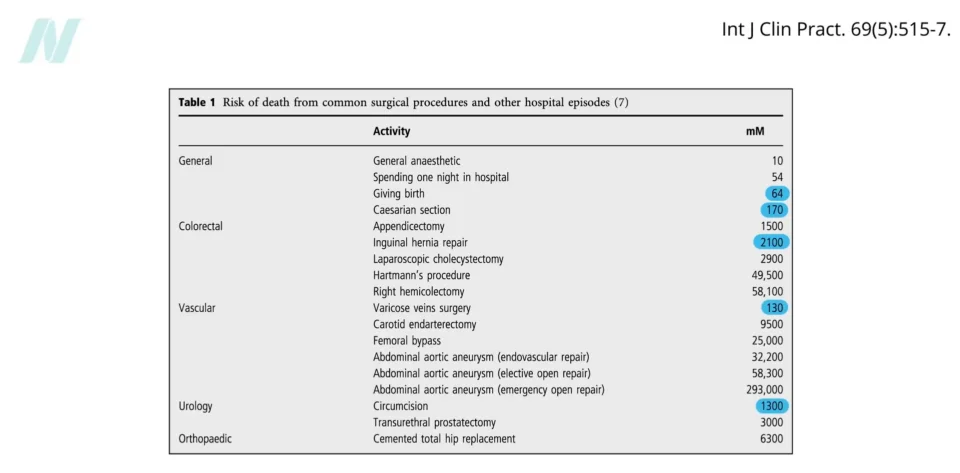 and
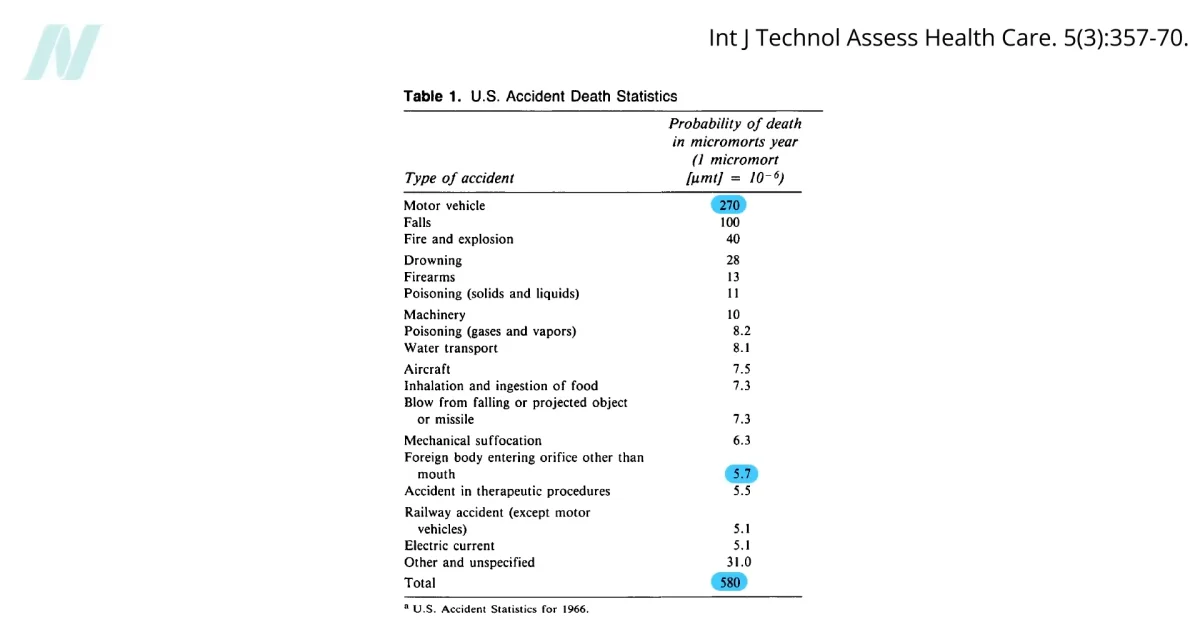 . It also links to a video about micromorts and anesthesia risk and a comparison involving implant-associated cancer:
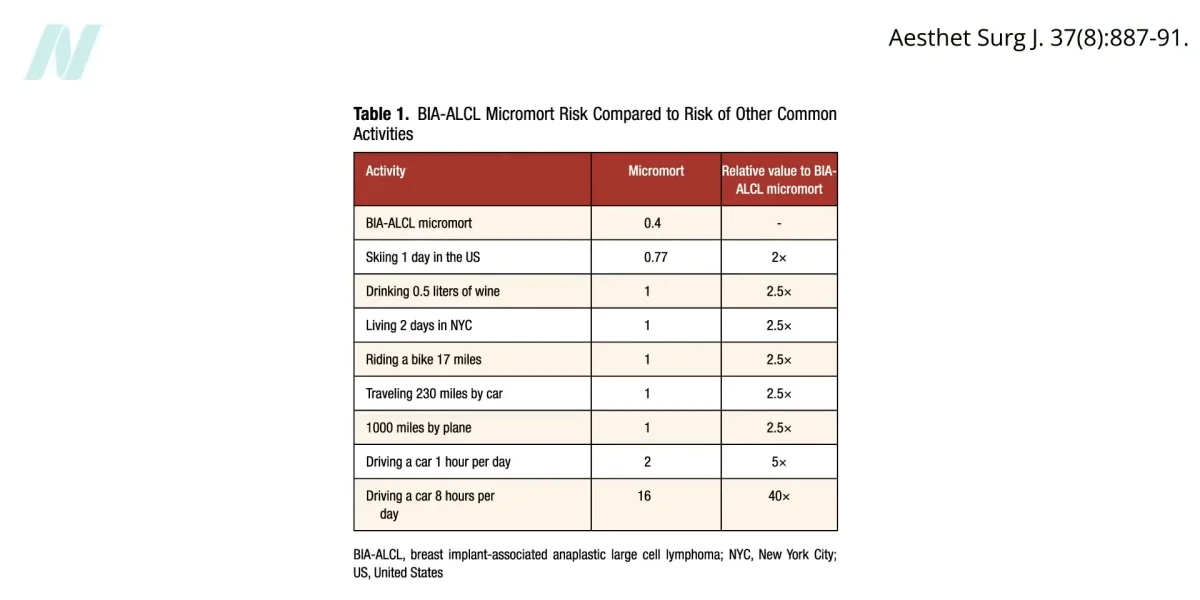 .
Micromorts are a starting point for clearer conversations, not a complete account of risk. Their strongest practical use is to help people ask sharper questions: how was this estimate calculated, how closely does it fit my situation, and what benefits or alternatives belong in the same discussion?