Trials suggest potassium chloride salt substitutes can lower blood pressure, but impaired kidney function and some medicines can raise the risk of excess potassium.

Potassium chloride salt substitutes can lower blood pressure in clinical trials, but their safety depends in part on how well a person’s kidneys remove excess potassium. The evidence points to a useful option for many people, with a clear reason for those at risk of impaired potassium regulation to discuss it with a clinician.

What the trials found
A meta-analysis of more than a dozen randomized controlled trials found that replacing sodium chloride with potassium chloride lowered blood pressure. Many trials used substitutes containing less than 30% potassium chloride, rather than eliminating sodium entirely, and still found a benefit. At that proportion, participants generally could not distinguish the substitute’s taste from regular salt.
The result fits a broader dietary pattern: many people consume more sodium and less potassium than is typical of diets rich in fruits, vegetables, leafy greens, roots, and tubers. Potassium-rich whole foods can support lower blood pressure, while processed foods often contain substantial added sodium and provide less potassium. Using a salt substitute may address some of that imbalance, though it doesn’t replace the wider benefits of eating more whole plant foods.
Taste and potassium from food
Potassium chloride can leave a bitter or metallic taste, especially when it replaces all the salt in a dish. Whether that flavor is noticeable depends on the food. It may work well in some recipes and make others unappealing, so the experience can vary from meal to meal.
For people with healthy kidneys, excess potassium from food is generally removed in urine. The source article also cites research in which healthy kidneys kept blood potassium within the normal range even with very high potassium intake. That finding describes kidney function under those study conditions; it shouldn’t be taken as a reason to pursue unusually high intake or to assume the same applies to people with kidney or other health problems.
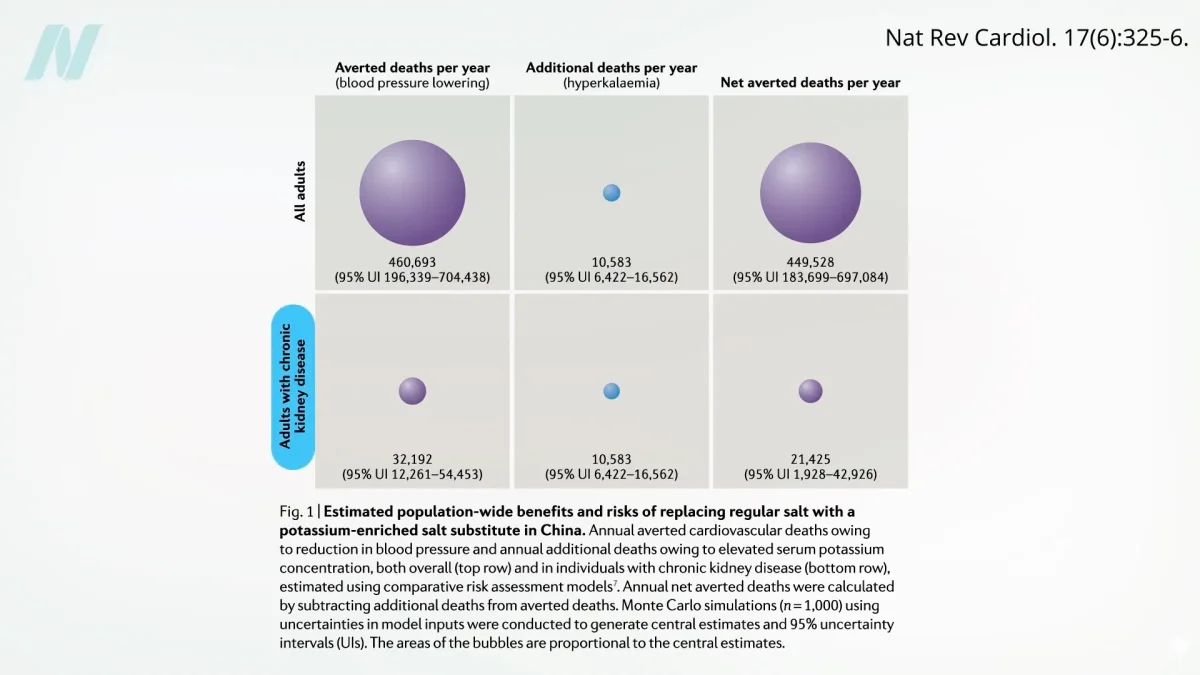
In salt-substitute trials, participants received an average of about 2,000 milligrams of potassium a day. Their blood potassium rose by about 0.14 millimoles per liter on average. The usual blood range is about 3.5 to 5.0 millimoles per liter; levels approaching 6 are concerning. These averages are reassuring for the trial participants overall, but they don’t show that every person faces the same risk.
Who may need extra care
The main concern is hyperkalemia, or too much potassium in the blood, when the kidneys cannot regulate potassium effectively. People with known kidney disease, diabetes that has affected kidney function, severe heart failure, adrenal insufficiency, or older age may be more vulnerable. Some medicines also interfere with potassium excretion. Anyone unsure whether a health condition or medicine affects their risk can ask a doctor or pharmacist; a clinician can assess kidney function when appropriate.
Reports of extreme potassium intake illustrate that very high amounts can be harmful, but they don’t establish the risk from ordinary food or typical salt-substitute use. The source describes a case involving a person who ate as many as 20 bananas a day for years, as well as an attempt to consume very large quantities of carrots. Those unusual examples should not be confused with the more modest amounts studied in salt-substitute trials.
The source also distinguishes modern potassium chloride products from an older, very different practice: a report from the 1940s concerned lithium chloride, which was then used as a salt substitute. A later case involved a fatal amount of potassium chloride taken intentionally. This is not evidence that typical use causes such harm; it underscores that concentrated salts can be dangerous if consumed in large quantities. If someone may be at immediate risk of self-harm, seek urgent local help.
Kidney disease and dietary potassium
Dietary advice for people with kidney disease has often restricted fruits and vegetables because they contain potassium. The source describes a shift in thinking as evidence grows that whole food, plant-based eating may help slow chronic kidney disease and delay kidney failure. It argues that potassium restriction should be based on a documented need, such as high blood potassium, rather than applied automatically to everyone with kidney disease.
That is a changing area of care, and a person’s appropriate diet depends on kidney function, blood test results, medicines, and other health conditions. The possible benefits of potassium for blood pressure do not remove the need for individual assessment when potassium regulation may be impaired.
The practical takeaway
Potassium chloride substitutes have lowered blood pressure in randomized trials, including products with less than 30% potassium chloride. For many people, they may offer a way to reduce sodium without a major change in taste, but they are not suitable for everyone. People with kidney concerns or conditions and medicines that affect potassium can discuss their individual risk with a doctor or pharmacist before relying on these products. Kidney function and blood potassium are central to judging whether the potential benefit is a good fit.